
- Golden Extreme Group and Messe Frankfurt Middle East signed a MOU establishing a strategic partnership to support the localisation of tyre manufacturing in the UAE.
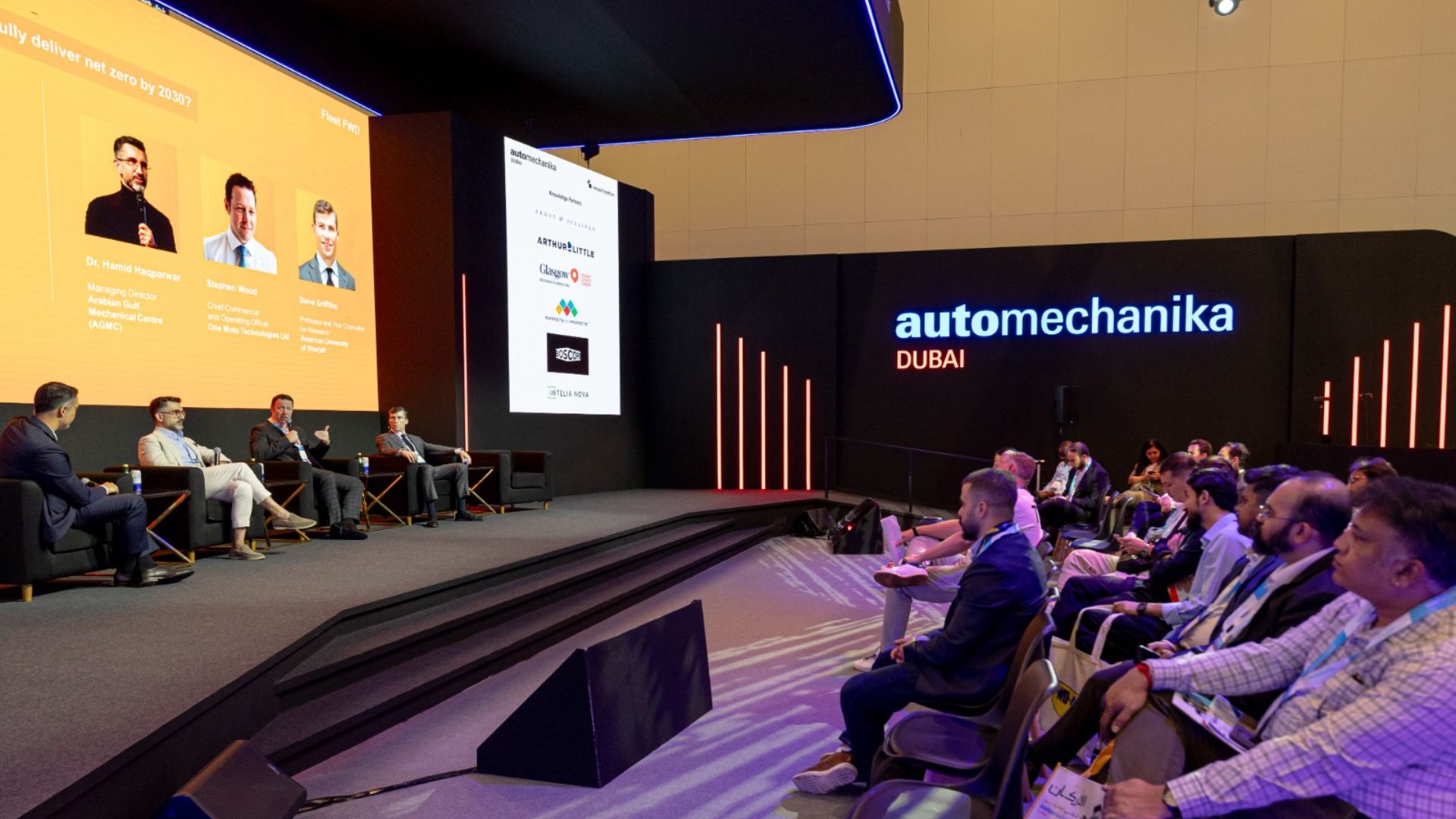
- Industry discussions explored fleet electrification, AI adoption and the future of insurance and collision repair.
- Tomorrow’s programme turns the spotlight on technician skills and Africa’s automotive aftermarket.
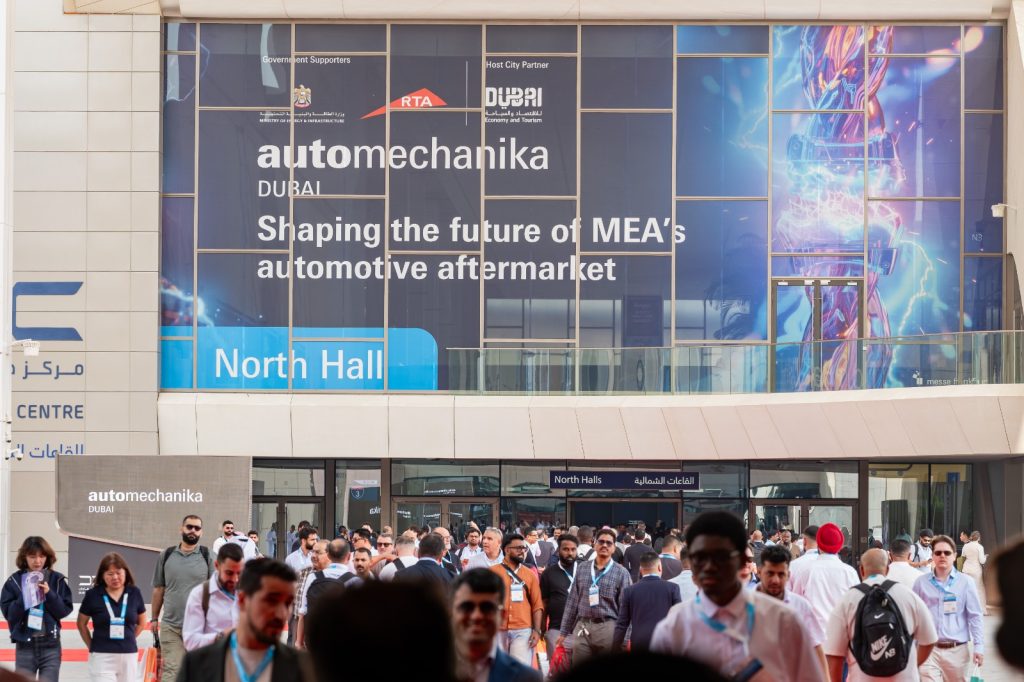
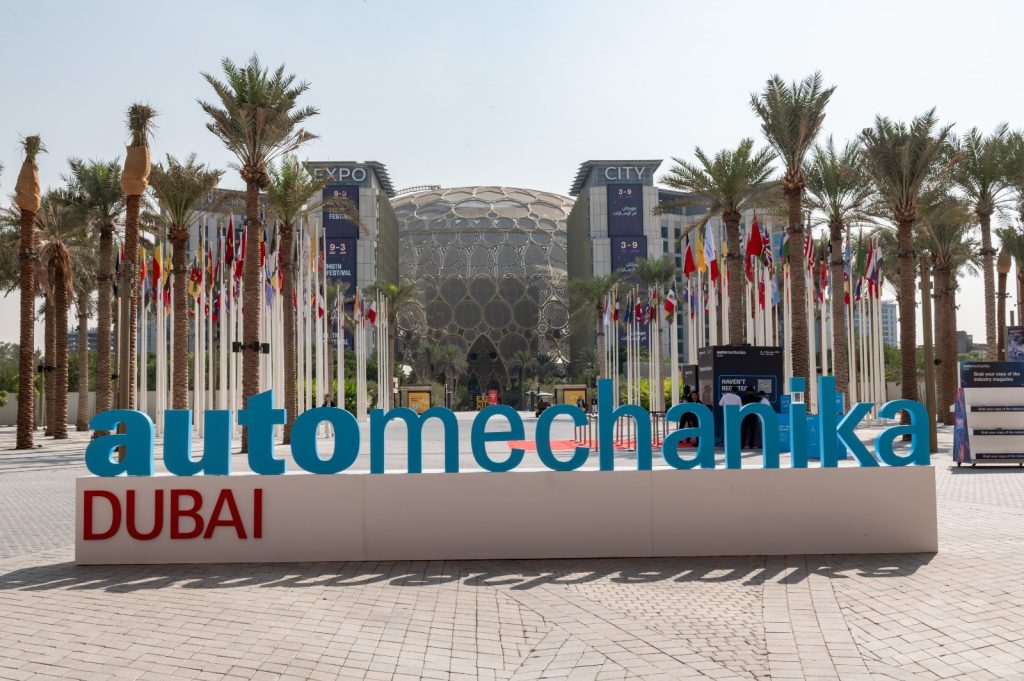
Dubai, UAE: Automechanika Dubai concluded the second day of its 23rd edition today at Dubai Exhibition Centre (DEC), Expo City Dubai, with manufacturers, suppliers, distributors, workshop professionals and fleet operators continuing discussions on the commercial and technological developments shaping the global automotive aftermarket.
Organised by Messe Frankfurt Middle East, the three-day event has brought together more than 1,300 exhibitors from over 50 countries, marking its first move to Expo City Dubai after 22 editions at Dubai World Trade Centre.
Among the strategic partnerships firmed at the event, Golden Extreme Group and Messe Frankfurt Middle East signed a memorandum of understanding establishing a collaboration to support the localisation of tyre manufacturing in the UAE. Under the partnership, Automechanika Dubai will serve as the first-choice platform for presenting milestones of the planned Sand Storm Tyres Manufacturing project from 2026 to 2028, connecting it with manufacturers, technology partners, and buyers.
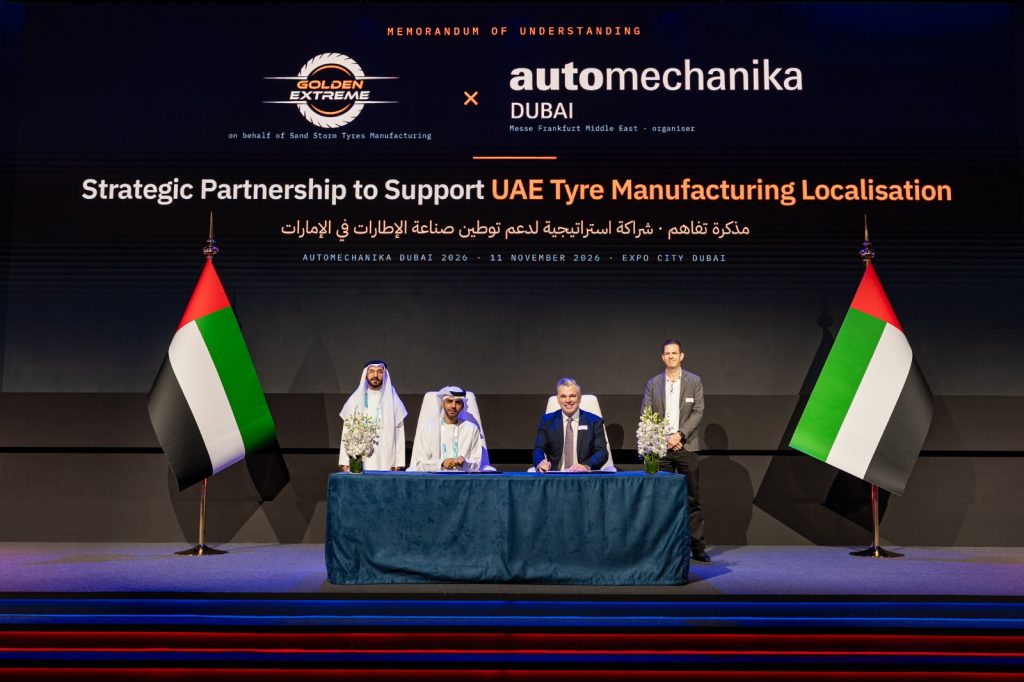
Chris Lee, Portfolio Director, Mobility & Logistics, Messe Frankfurt Middle East, said: “The show floor brings manufacturers, suppliers, distributors, and buyers together to explore new business opportunities across borders. Automechanika Dubai also provides a meeting point for the private and public sectors to meet and forge relevant partnerships. The agreement with Golden Extreme Group reflects the role the show can play in connecting manufacturing ambitions with international expertise and commercial partners.”
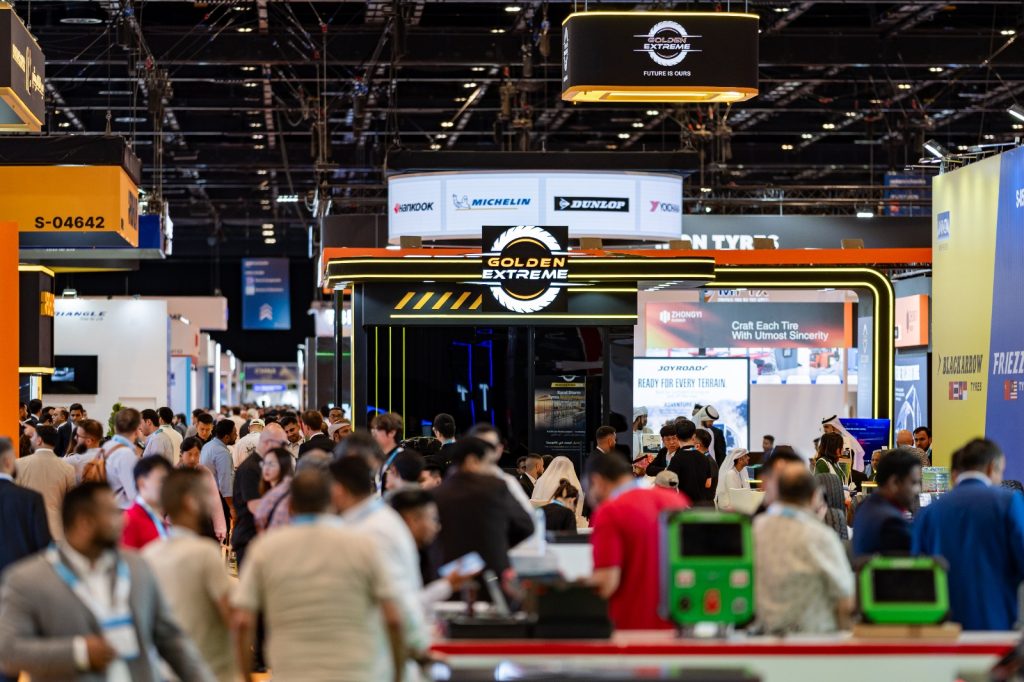
The second day’s conference programme continued to address the priorities facing aftermarket businesses and the wider mobility sector. Aftermarket Central explored opportunities to develop and scale aftermarket businesses, with discussions covering tyres, batteries, circularity, and service-led revenue models. Innovation4Mobility continued its examination of emerging mobility technologies and the developments set to influence the future of transport.
Fleet electrification puts costs and operational readiness in focus
Fleet FWD also opened its two-day programme, focusing on the evolving demands of fleet operations and commercial mobility. Discussions examined fleet electrification, operational efficiency, connected technologies and the changing requirements of commercial transport and logistics.
During the Fleet FWD panel “Can fleets successfully deliver net zero by 2030?”, speakers examined the operational and financial considerations behind electrification. Stephen Wood, Chief Commercial and Operating Officer, One Moto Technologies Ltd, said: “Fleet operators look at total cost of ownership, but they also need minimal disruption to their operations. If they’re only saving 5 or 10% and there’s a risk involved, they won’t take it. If they’re saving 30, 40 or 50%, it becomes a different conversation.”
Steve Griffiths, Professor and Vice Chancellor for Research, American University of Sharjah, said: “Utilisation is very, very big. The more you drive the vehicle, the more you get back in operating savings. Fleet operators also need to plan where they charge, make the most of depot charging, and watch battery health, especially in summer.”
AI adoption demands greater operational understanding
In the “AI and Cybersecurity in connected mobility” session, Goran Novkovic, Director, Industrial Cybersecurity, Toronto Transit Commission, said: “There is a lot of AI hype. Pilots and demos look great, but the problems start in the real operational environment. You cannot only feed data to AI; you need to feed it context.”
Under the theme “Connecting Changemakers”, IBIS@Automechanika Dubai brought together insurers, collision repair leaders, bodyshops, and technology providers to explore connected technology, claims intelligence and shared repair standards across the GCC. Discussions examined how digital workflows and better use of data can improve the claims journey, control costs and strengthen repair safety and consistency.
“This is our seventh year with Automechanika Dubai, sharing how we can improve the safety, skills, and standards of the industry. IBIS is all about connecting change makers, and it’s the change makers who come to Automechanika Dubai,” said Robert Snook, Conference Director, IBIS.
Final day to spotlight skills and African aftermarket opportunities
Tomorrow, 12 November, the final day of Automechanika Dubai will continue the Fleet FWD programme, with discussions addressing commercial transport, fleet operations and the technologies shaping the logistics sector. Training & Development will also run hands-on workshops and live demonstrations for technicians, covering EV servicing, diagnostics and connected-vehicle skills.
The third day will also feature AfriConnections, bringing together industry stakeholders to examine Africa’s evolving automotive aftermarket, including market opportunities, intra-African trade, supply chains, technology and skills development. The programme will explore the potential for stronger partnerships between African markets and international automotive businesses, with Dubai serving as a meeting point for regional and global industry participants.
As the 23rd edition approaches its conclusion, Automechanika Dubai continues to provide an international platform for businesses and industry professionals to exchange expertise, develop commercial relationships and explore opportunities across the automotive aftermarket.
For more information, click here.