
Paint preparation inside a Bodyshop network is rarely visible at the level network-quality standards operate — it sits several layers below the metrics that get reported upward, treated as a technician-level detail rather than a brand-standard one. That assumption becomes harder to defend as networks formalize the shift to water-based paint systems across authorized dealers.
The shift changes three things at once, each with a direct operational consequence:
- Contamination tolerance tightens.
- Cleanup becomes a recurring line item, not a background task.
- OEM certification increasingly audits process, not just outcome.
For a network expected to deliver consistent repair quality, customer satisfaction, and environmental compliance across hundreds of dealer touchpoints, paint preparation is no longer a background process at the shop floor — it is a standardization lever that directly determines whether the brand promise is met consistently, unevenly, or not at all.
PPS: Built for the Water-Based Paint
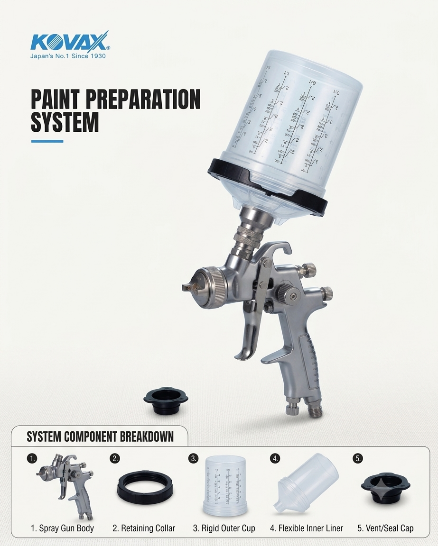
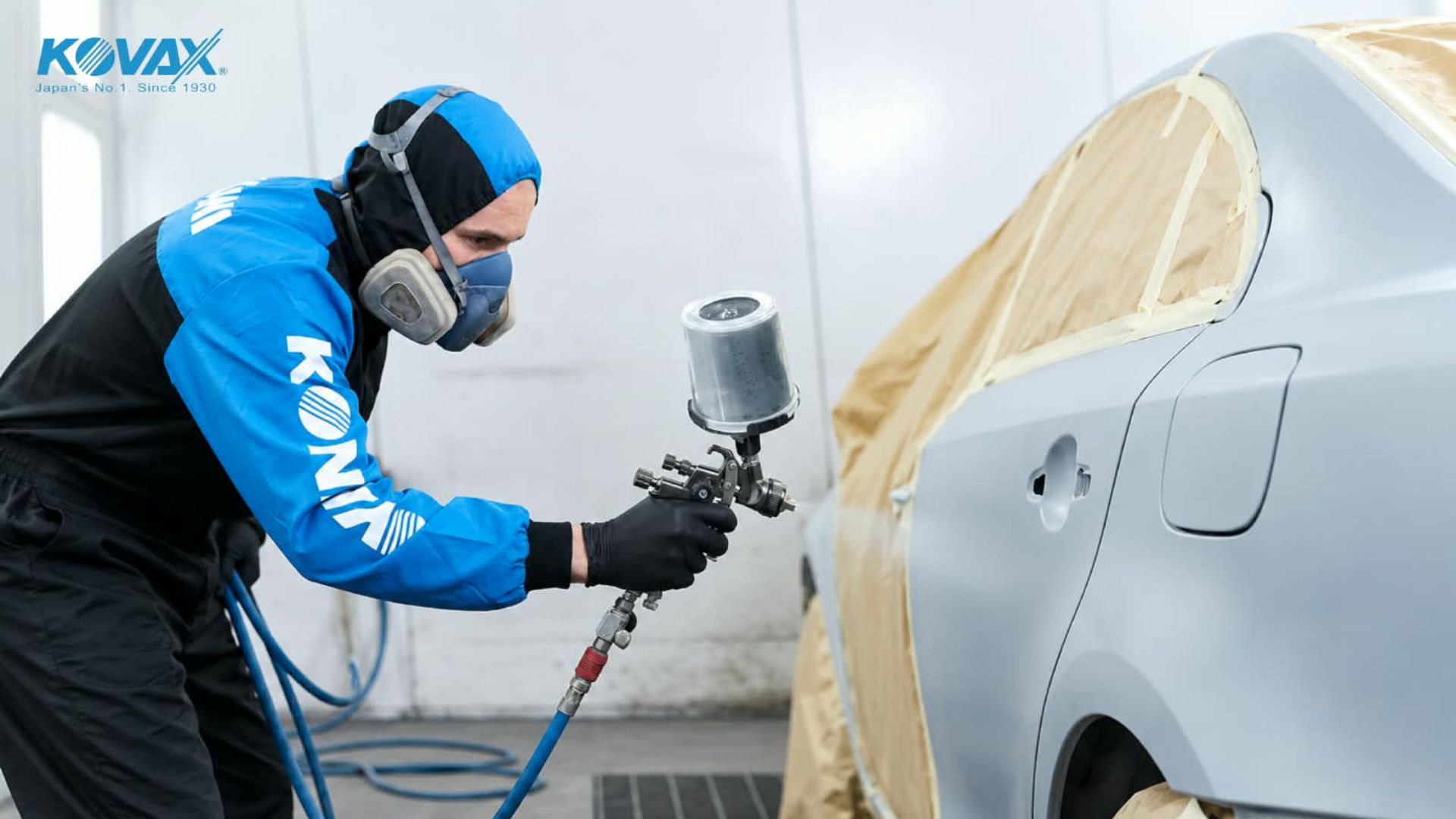
A Paint Preparation System (PPS)—a reusable cup and collar paired with a disposable, calibrated liner and filtered lid—addresses the cleanup and contamination problem directly. Instead of mixing in one cup, filtering into a separate reservoir, and manually cleaning multiple components between colors, the painter mixes directly in the disposable liner, snaps on the lid, and discards both after spraying—leaving only the adapter and gun to clean.
The PPS system remains compatible with spray guns across all brands, requiring only a change of adapter
Clean Mix in Action: The Measurable Impact
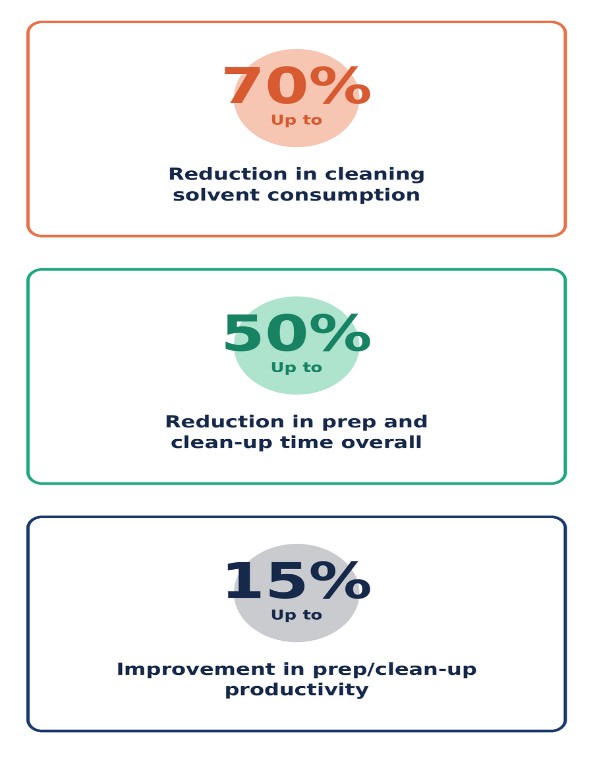
- Up to 70% reduction in cleaning solvent consumption—most guns clean with less than 80 ml of solvent.
- Up to 50% reduction in prep and clean-up time overall.
- Up to 15% improvement in prep/clean-up productivity specifically from using a fresh disposable lid and liner per mix instead of washing reusable components.
The Paint Strainer: The Last Line of Defence Before the Gun
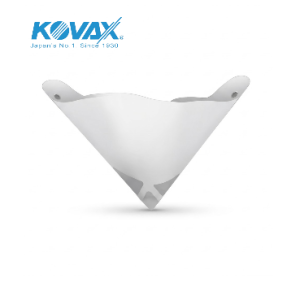
Every mix — however carefully prepared — carries a risk of contamination: skin formation, dried paint particles, dust, or undissolved pigment. A paint strainer sits at the final stage of preparation, filtering the mixed paint immediately before it enters the spray gun, catching exactly the size of particle that’s too small to see but large enough to clog a nozzle or surface as a defect in the finish.
Skipping this step shows up in three concrete, avoidable ways:
- Nozzle clogs and gun stoppages. A blocked nozzle mid-spray forces the painter to stop, disassemble, and clean the gun before resuming — losing booth time and risking an uneven coat on the panel already in progress.
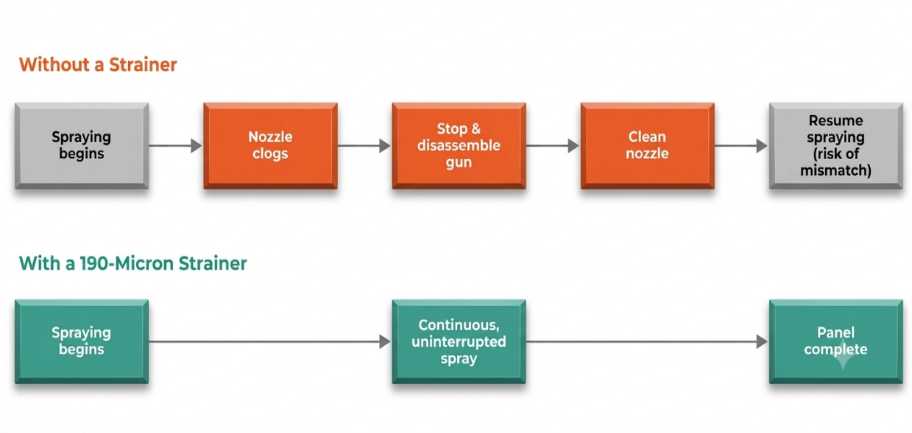 2. Surface defects reaching the topcoat. Unfiltered particles that make it into the paint show up as nibs or fisheyes on the finished panel — defects that are far more expensive to correct after cure than to filter out before spraying.

Taken together, the paint strainer and the Paint Preparation System represent one discipline, applied at two points: control what enters the mix, and control what happens to it afterward. The saving comes from removing waste that was never adding value: solvent spent cleaning equipment a disposable liner makes unnecessary, time lost to a clog a 190-micron filter would have caught, rework triggered by a defect that never needed to reach the topcoat.
That is also the environmental story, without a separate initiative to fund it: less solvent consumed, less contaminated waste generated, less material discarded to correct an avoidable defect. For a Bodyshop, and for the network it belongs to, profitability and compliance are not competing priorities — they are two readings of the same improvement, visible on every job.