
Summary
- North American arm’s profit margin drops to 5.4% from 14.4%
- Full-year guidance confirmed
- Flags first-quarter tariff impact of at least 100 million euros
- Order momentum suggests US market recovery
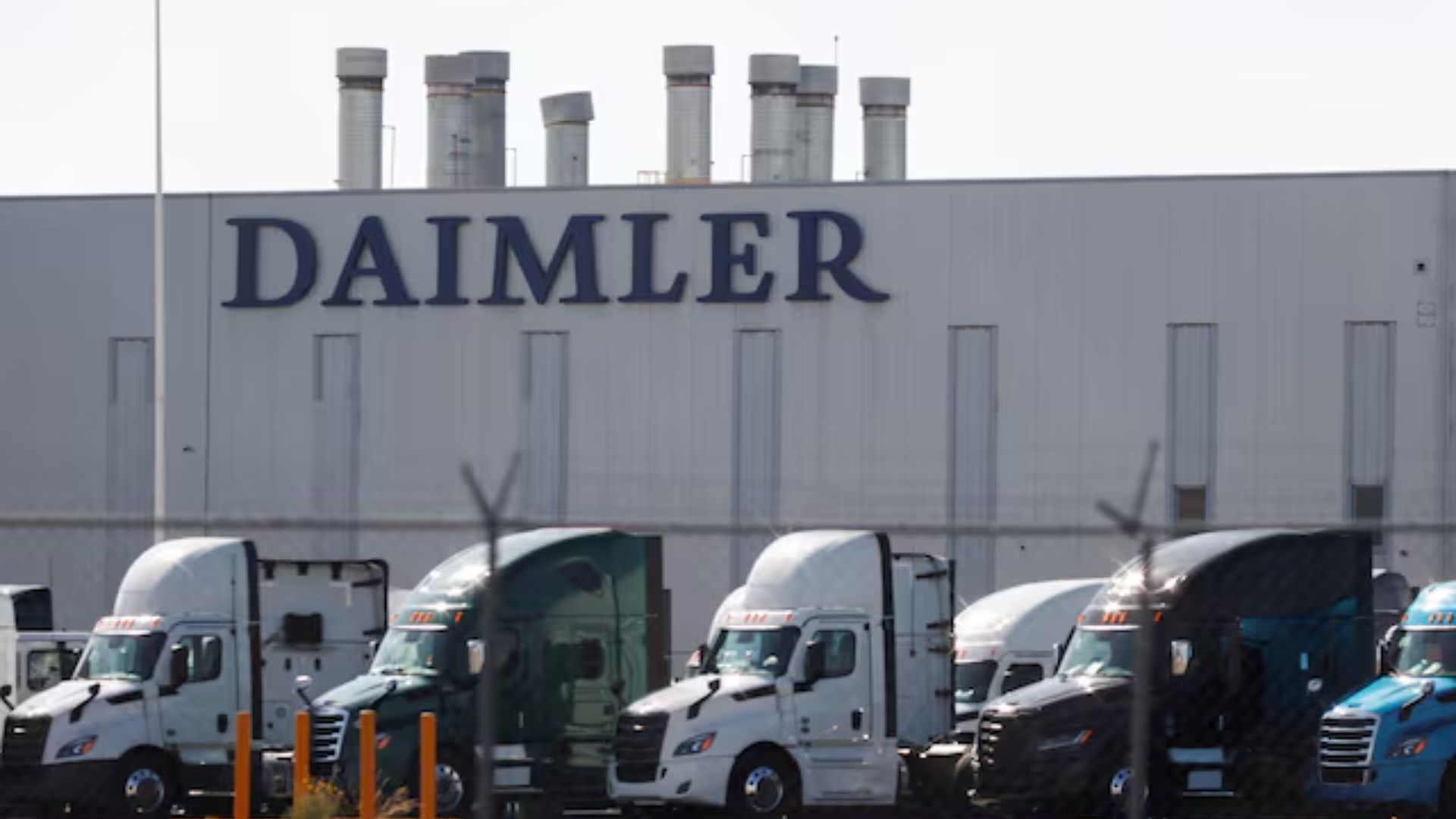
(Reuters) – Daimler Truck’s first‑quarter operating profit more than halved owing to historically weak demand and import tariffs in a North American market where volumes fell to a 16-year low, the company said on Wednesday.
Adjusted operating profit fell to 498 million euros ($584 million) from 1.08 billion euros a year earlier, reflecting a sharp slowdown in North America, the group’s largest and most profitable market.
The quarter for the first time showed full tariff effects at the group’s Trucks North America division, CFO Eva Scherer said.
The sales decline, import tariffs and adverse currency effects cost the North American arm 624 million euros in the quarter, the group said.
Scherer added that the tariff impact alone amounted to at least 100 million euros in the first quarter.
Adjusted return on sales in North America fell to 5.4% from 14.4% in the same period last year.
Despite the weak start to the year, Daimler Truck struck a more upbeat tone on demand. Scherer said North American sales in the second quarter were expected to be about 50% higher than the first three months of 2026, with profitability at the upper end of the group’s confirmed full‑year guidance.
The North American division’s order intake increased by 86% in the quarter, chiming with comments from rivals Traton and Volvo.
While the company has so far registered only a limited impact from the war in the Middle East, prolonged high oil prices could weigh on demand, Scherer said.
Daimler Truck CEO Karin Radstrom added that higher diesel prices were not directly accelerating adoption of zero‑emission trucks, citing charging and refuelling infrastructure as a key bottleneck.
($1 = 0.8534 euros)
Reporting by Amir Orusov, additional reporting by Ilona Wissenbach Editing by Christoph Steitz and David Goodman