

Summary
- Crucial freight industry reliant on imported diesel
- War has caused shortages, high prices in Australia
- Electric truck firms report surge in interest
SYDNEY, (Reuters) – Interest in electric trucks has picked up in Australia, one of the most road-freight dependent countries in the world, as the Middle East crisis disrupts fuel supply and sends prices soaring.
Electric truck companies told Reuters they have experienced an increase in inquiries from customers and investors since the Iran war began.
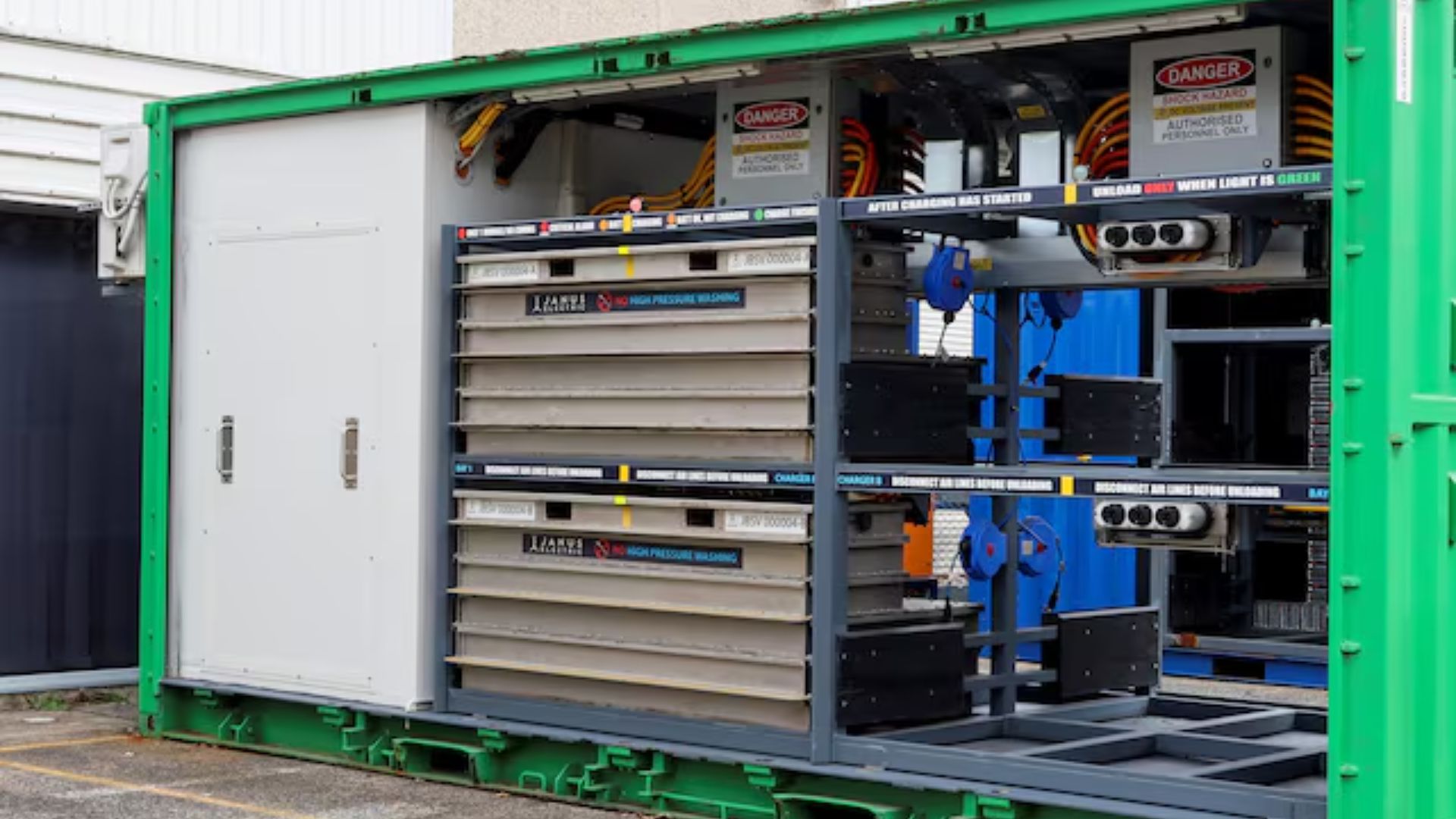
“The current fuel crisis has been very good for us,” said Ben Hutt, CEO of Janus Electric, a manufacturer of vehicle battery packs whose shares have jumped as much as 58% since the U.S.-Israeli war on Iran began in late February.
“We’ve seen a massive uptick in interest from governments around the world, from customers around the world and from customers here in Australia,” he said.
Australia’s geography and low population density makes it one of the most heavily dependent countries in the world on road freight, relying on diesel trucks to transport raw materials, food and goods across vast distances.
But despite the interest in electric trucks in recent weeks, the country remains a “diesel truck-dominated system” with around 800,000 diesel trucks on the road compared to only 1,000 electric ones, said Hermione Parsons, CEO of the Australia Logistics Council (ALC), the apex body of the country’s freight and logistics industry.
The electrification of the sector has long been stymied by high upfront costs, limited charging infrastructure and doubts about the technology’s range and load capacity.
That equation is beginning to shift for operators as diesel prices climb above A$3 ($2.14) per litre, eating away at their bottom lines, people in the industry said.
“The technology works, the range is there, the power and torque is there and economically they’re much cheaper to run,” said Hutt. More drivers were also becoming accepting of electric trucks, he said.
Janus Electric turns existing heavy trucks to run on interchangeable battery packs, a conversion process that costs about A$150,000 ($107,550). Converted vehicles hauling a single trailer can travel roughly 400 km (250 miles) before needing to swap batteries at dedicated stations, a process that takes under four minutes, Hutt said.
Daniel Bleakley, co-CEO of New Energy Transport, said his electric trucking company had also received a wave of recent inquiries.
“We’ve seen a surge in interest from major transport buyers in Australia as well as investors,” he said.
Last month, New Energy Transport said it completed Australia’s first electric end-to-end heavy road freight delivery, travelling 460 km (285 miles) between Sydney and Canberra. In overseas trials, its vehicles have travelled up to 670 km (415 miles) carrying 49 tonnes on a single charge.
John Rose, a professor at the University of Sydney’s Institute of Transport and Logistics Studies, said electric trucks were being increasingly used for last-mile logistics and city routes. Use for long-haul transport would take “many, many years”.
“We’re seeing the electrification in certain parts of the sector and not in others. The benefits of this is quite widespread if we can actually make it happen.”
“This (the war) is definitely going to push it much quicker.”
Parsons at ALC said: “The electric truck situation and the appetite for it continues, without doubt, and I’m sure that it will be increasing, but it is in its infancy.”
($1 = 1.3947 Australian dollars)
Reporting by Cordelia Hsu in Sydney; Writing by Christine Chen