
(Reuters) – Greetings from London! Six weeks after the war in the Middle East began, unless a peace deal is in the offing then it looks like a prolonged oil shock for all of us.
High fuel prices and rising inflation could hurt car sales overall, but in the short term we have already seen a spike in interest in used EVs in Europe, Asia and the United States as consumers seek ways to avoid pain at the pump.
According to data released by Benchmark Mineral Intelligence on Tuesday, the war helped spur a 37% year-on-year increase in EV sales in Europe in March.
As many cars are ordered weeks or months in advance in Europe, the real impact of the war will emerge in data for April and May.
But so far, it looks like EV makers stand to gain from high fuel prices.
Which brings us to today’s Auto File…
- Nissan cuts models
- Is an affordable Tesla coming?
- Stellantis, Leapmotor taking it to the next level?
Nissan shrinks its lineup
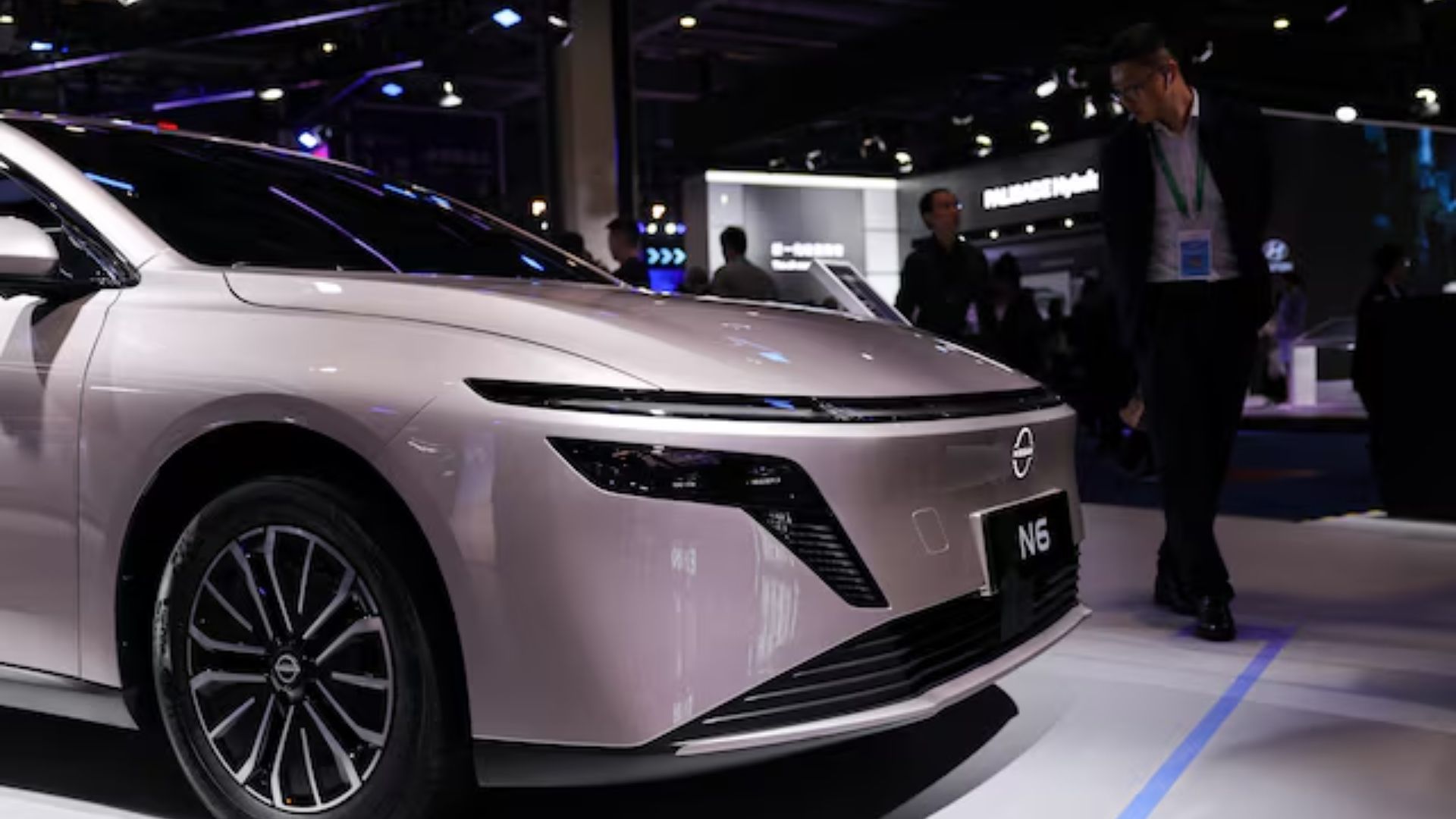
As part of its efforts to turn its business around, Nissan now says it will cut the number of models in its lineup to 45 from 56.
Since CEO Ivan Espinosa took over at the Japanese automaker last year, the company had already announced plans to get rid of factories and cut its workforce by 15%.
While Espinosa says the decision to slash models will bring the automaker’s portfolio strategy “to life, anchored in profitability and built around a leaner, stronger lineup,” this represents a retreat.
Making cars is a scale business. And legacy automakers like Nissan face increasing competition from Chinese rivals (many of whom are not expected to survive the next decade because China has too many car brands).
As they lose market share, low-selling models and brands are likely to fall by the wayside as automakers focus on popular, higher-margin models to preserve profits.
Nissan is ahead of the curve here. But others are no doubt already looking at which models and which brands they need to ditch to survive global consolidation of the auto industry.
Recommended reading:
- Chinese car exports accelerate
- Hyundai Palisade back on sale
- Brazilian top labour inspector ousted over BYD
Tesla’s affordable EV returns?
Tesla killed its affordable EV project in 2024 as it shifted its focus to robotaxis and humanoid robots.
But now, as Reuters colleagues report, the U.S. EV maker has been talking to suppliers to discuss plans for an affordable compact SUV.
You can read all about it here.
According to a source Reuters spoke to, the new model could potentially help Tesla both sell more EVs for human drivers and use them for robotaxis.
It is also possible that as Tesla shifts more away from mass-market cars, it still needs the cash flow from EVs to fund its transition.
In a piece of separate good news for Tesla, Dutch regulators approved the EV maker’s FSD driver assistance software with required human supervision on highways and city streets.
This is a first for Tesla in Europe and Dutch vehicle authority RDW has notified the European Commission of its plan to seek European Union-wide approval.
Tesla charges a 99-euro-per-month subscription fee for FSD, which could mean significant cash flow if the company can persuade many existing Tesla owners to sign up.
Stellantis tapping Leapmotor for cars?
Ever since Stellantis bought a stake in Leapmotor in 2023, one of the main questions has been whether the world’s No. 4 automaker by sales would use the Chinese EV maker’s tech to build its own cars.
According to a report from Reuters colleagues, Stellantis is in talks with Leapmotor to do just that.
You can read more about it here.
Sources tell Reuters that the talks are focused on developing an Opel-branded electric SUV that would use the Chinese automaker’s technology and be produced at Stellantis’ Zaragoza plant in Spain.
Traditional automakers like Volkswagen are already developing cars with Chinese joint venture partners to sell in China. And some are importing Chinese-made models to Europe.
But producing a car in Europe for sale to European consumers using Chinese EV technology would take it to the next level.
Germans’ China sales slide
The rise of Chinese automakers has meant falling sales for Germany’s automakers in China, the world’s largest car market.
Those declines continued in the first quarter.
Volkswagen, which long dominated the market in China, said sales fell 15% there in the first quarter. The group’s premium brands, Porsche and Audi, also posted 21% and 12% declines in China, respectively.
Mercedes-Benz reported a 27% sales slump in China as the German premium carmaker overhauls its model lineup there.
And BMW posted a 10% drop in sales in China.
China has consistently made up about a third of German automakers’ sales and they are desperately seeking a fix to regain lost ground.
Fast Laps
EV maker Slate Auto said it has raised $650 million in a Series C funding round, as the Jeff Bezos-backed firm gears up to deliver its first vehicles late this year.
Chery is looking to expand car production in Europe through partnerships with other automakers allowing it to use existing factories, top executives at the Chinese carmaker said at an event in Paris.
India’s auto-making state of Haryana ordered a 35% hike in minimum wages after factory workers boycotted work and staged protests over rising living costs as a result of the U.S.-Israeli war on Iran.
Volkswagen will halt production of the ID.4 electric SUV out of its Tennessee plant this month, during a challenging time for the U.S. electric vehicle market.
China’s Geely Auto has launched its i-HEV Intelligent Hybrid system, aiming to challenge the dominance of Japanese automakers in the conventional hybrid vehicle segment by improving fuel efficiency and intelligence capabilities.
German truck manufacturer Traton reported a 6% drop in vehicle sales for the first quarter, driven by a 21% decline in its U.S.-based International brand.
Editing by Alexander Smith