
Summary
- Restructuring includes further 50,000 job cuts, bringing group’s total to 100,000
- Agreement leaves future of four German plants open
- Volkswagen shares up 5.9%, second-biggest gainer in Europe
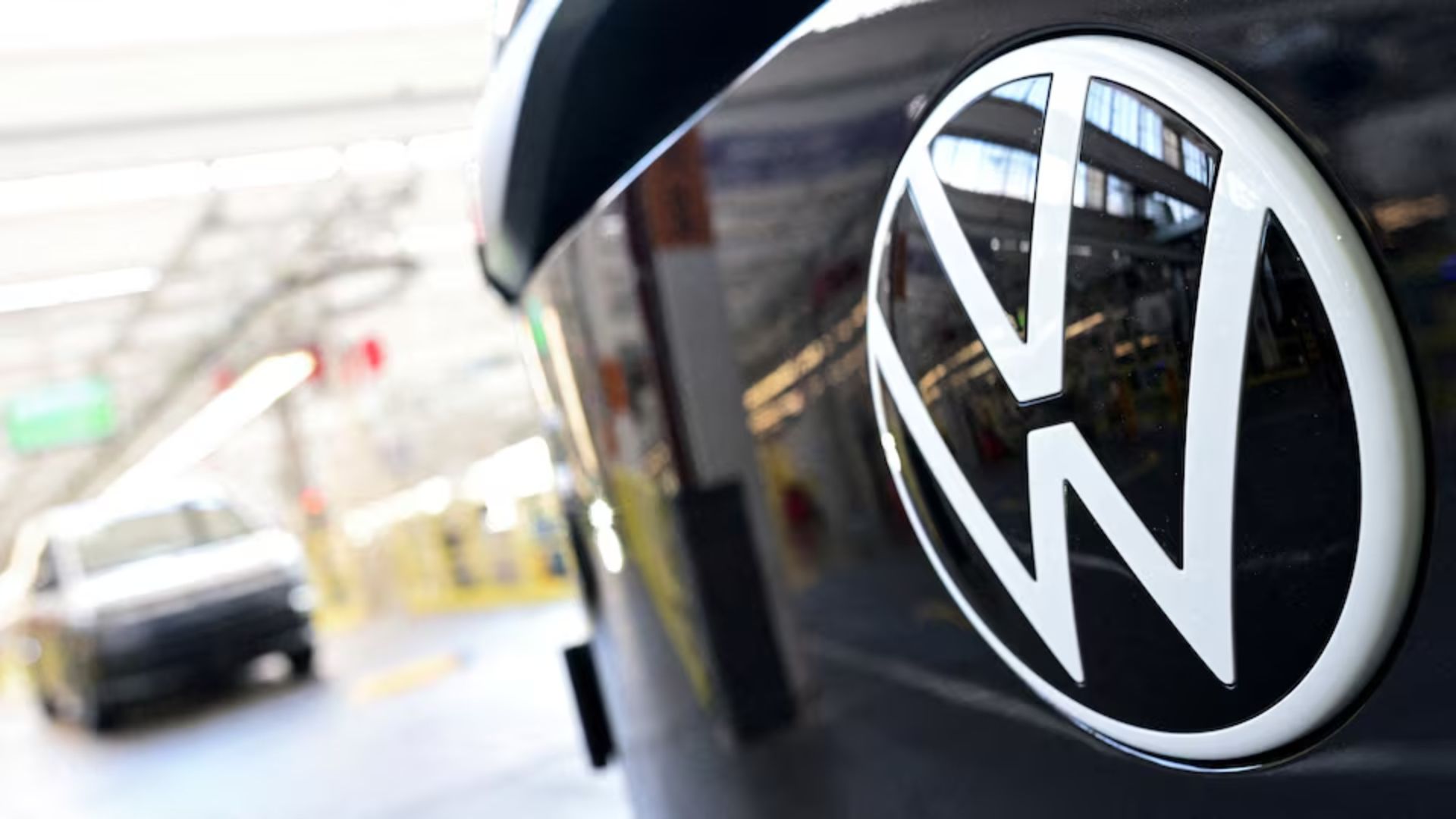
FRANKFURT/BERLIN, (Reuters) – Volkswagen shares hit an 11-week high after the supervisory board of Europe’s largest automaker late on Thursday struck an ambitious turnaround agreement that put the focus on sweeping job cuts and averted a clash between major stakeholders.
The deal on the biggest restructuring in the group’s 89-year history includes a further 50,000 job cuts, bringing the total agreed to 100,000, and leaves open the future of four of its German plants.
Volkswagen, like most of its European peers, is under pressure from painful tariffs in the United States, falling sales in former cash cow China and aggressive Asian rivals entering the stagnant European market. All these factors have gnawed at the group’s operating margin, which stood at 3.8% in the first half, down from 7.9% in 2022, its peak over the past decade.
Shareholders and analysts expressed relief that Volkswagen — with a workforce of more than 650,000, a complex structure and powerful stakeholder groups — is still able to make far-reaching decisions in times of crisis.
Volkswagen shares were up 5.9% at 1046 GMT, the second-biggest gainer on the pan-European STOXX 600 index, having earlier hit their highest since June 18.
Ingo Speich of Volkswagen shareholder Deka Investment called the agreement a breakthrough: “Does this mean Volkswagen is out of the woods? Definitely not. Now comes the hard part: execution.”
Moritz Kronenberger at Union Investment, while welcoming the deal, also said the pressure was now on management to deliver: “The ball is now entirely in the executive board’s court. There are no more excuses.”
Management, outnumbered by unions and Lower Saxony on the supervisory board, had considered calling a shareholder meeting to push through its demands, which would have been an unprecedented stakeholder conflict at the carmaker.
While the deal gave no details on where and by when the cuts would happen, Volkswagen CEO Oliver Blume previously said that half of the savings would have to come from Germany, suggesting around 25,000 job cuts at its local operations.
Details of the job cut program will have to be hammered out between management and unions, which secured a job guarantee for most of Volkswagen’s German operations until 2030 as part of a previous turnaround package in 2024.
“We are pleased this agreement has been achieved,” Citi analysts wrote. “Nevertheless, this agreement does not automatically change the EU competitive environment, continued China market-share losses, and raw material cost pressures.”
Volkswagen will seek alternatives for its German plants in Emden, Hanover, Zwickau and Neckarsulm following production phase-outs in the next decade, which could cover a range of options, including repurposing them under new ownership, people familiar with the matter have said.
Olaf Lies, state premier of Lower Saxony — which holds 20% of Volkswagen’s voting rights — said closing the plants was not a done deal and that management had been asked to look for alternative solutions.
“If we have to cut capacity, the automatic conclusion cannot be that we cut it in Germany,” he told reporters, still acknowledging that Europe’s auto sector was under enormous pressure.
Editing by Ludwig Burger; Editing by Sharon Singleton