

BEIJING, (Reuters) – China’s auto industry has likely moved past its “golden era,” NIO Chief Executive William Li said on Thursday, as a downturn in domestic car sales extended into May.
A rebound in the world’s largest auto market has yet to materialise, despite the sector’s continued export strength, Li told reporters in Beijing.
Li said NIO’s focus is on its home market.
“We’re focused primarily on China,” Li said when asked about overseas expansion. The company began exporting in 2021, starting with Norway, but overseas shipments have remained negligible.
Li said China remains the most efficient place to invest in pure electric vehicles, noting that deploying similar levels of capital abroad would take significantly longer with less certain returns. Plug-in hybrids and internal combustion engine vehicles, by contrast, are better suited to global markets, he added.
NIO, known for its battery-swapping technology, currently sells only pure EVs.
The company is among a group of Chinese EV makers betting that advanced driver-assistance systems, in-house software and broader model lineups can help them navigate intensifying domestic competition.
As part of that push, NIO plans to increase spending on computing resources for smart-driving development fivefold this year compared with 2025, according to Li.
Industry data showed China’s domestic car sales were expected to stagnate in 2026, while growth in electric and plug-in hybrid sales was forecast to slow after years of rapid expansion.
In April, China’s domestic car sales fell for a seventh straight month, though exports remained strong.
China’s automobile ownership hit 370 million vehicles, meaning it’s “no longer a growth market, but rather a saturated market,” Li said.
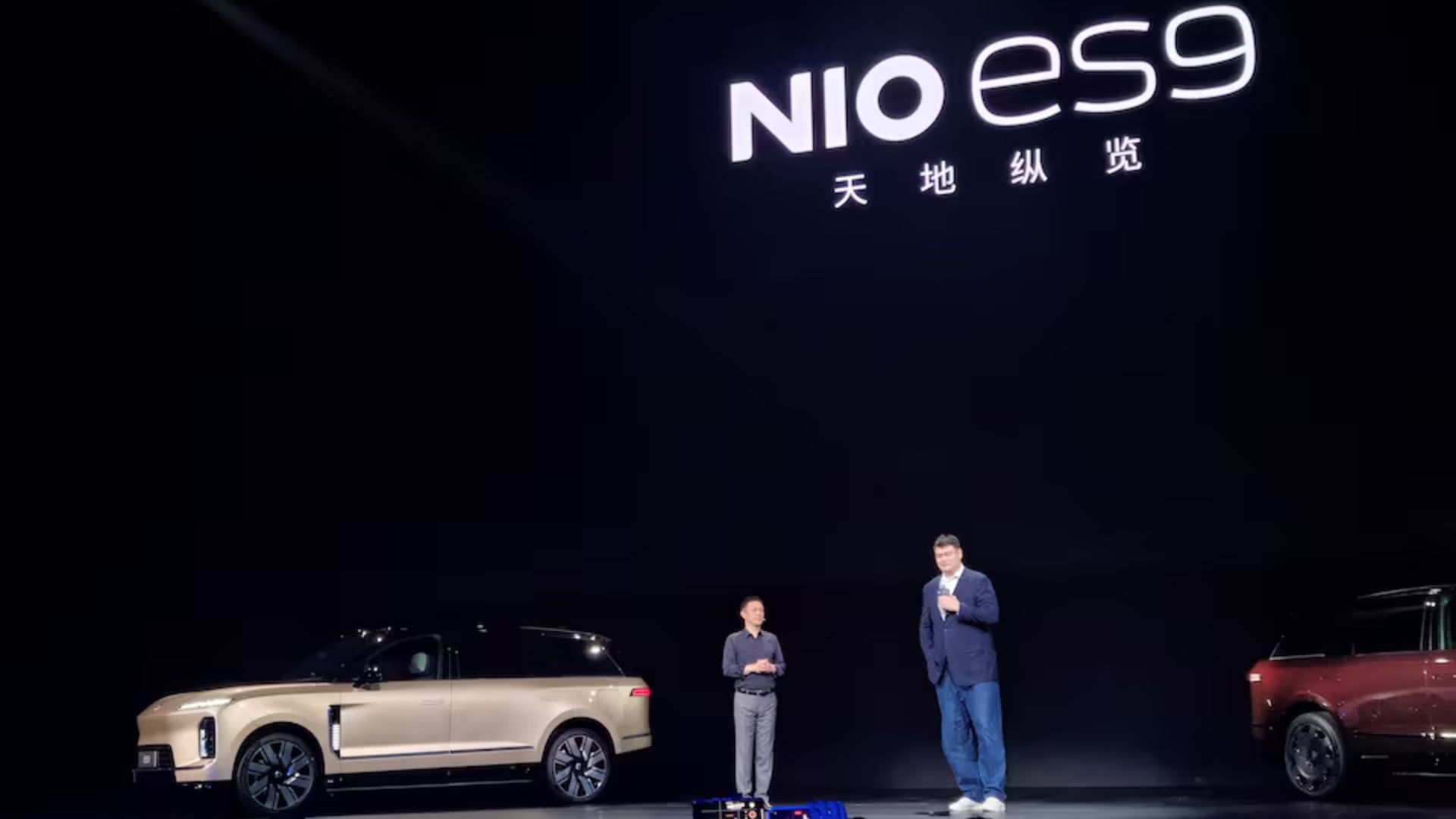
Against that backdrop, high-profile launches like NIO’s luxury flagship ES9 SUV this week are becoming more important as automakers seek to defend market share and improve margins.
NIO’s Hong Kong-listed shares jumped 10.5% to HK$46.08, on track for their biggest one-day percentage gain since March 11.
Reporting by Ju-min Park and Qiaoyi Li; Editing by Muralikumar Anantharaman and Thomas Derpinghaus