
Summary
- First Chinese auto show opens in Buenos Aires, more than 20 brands on display
- Chinese automakers accounted for 10% of car sales in August
- Milei backs consumer choices, despite concerns over Chinese manufacturers
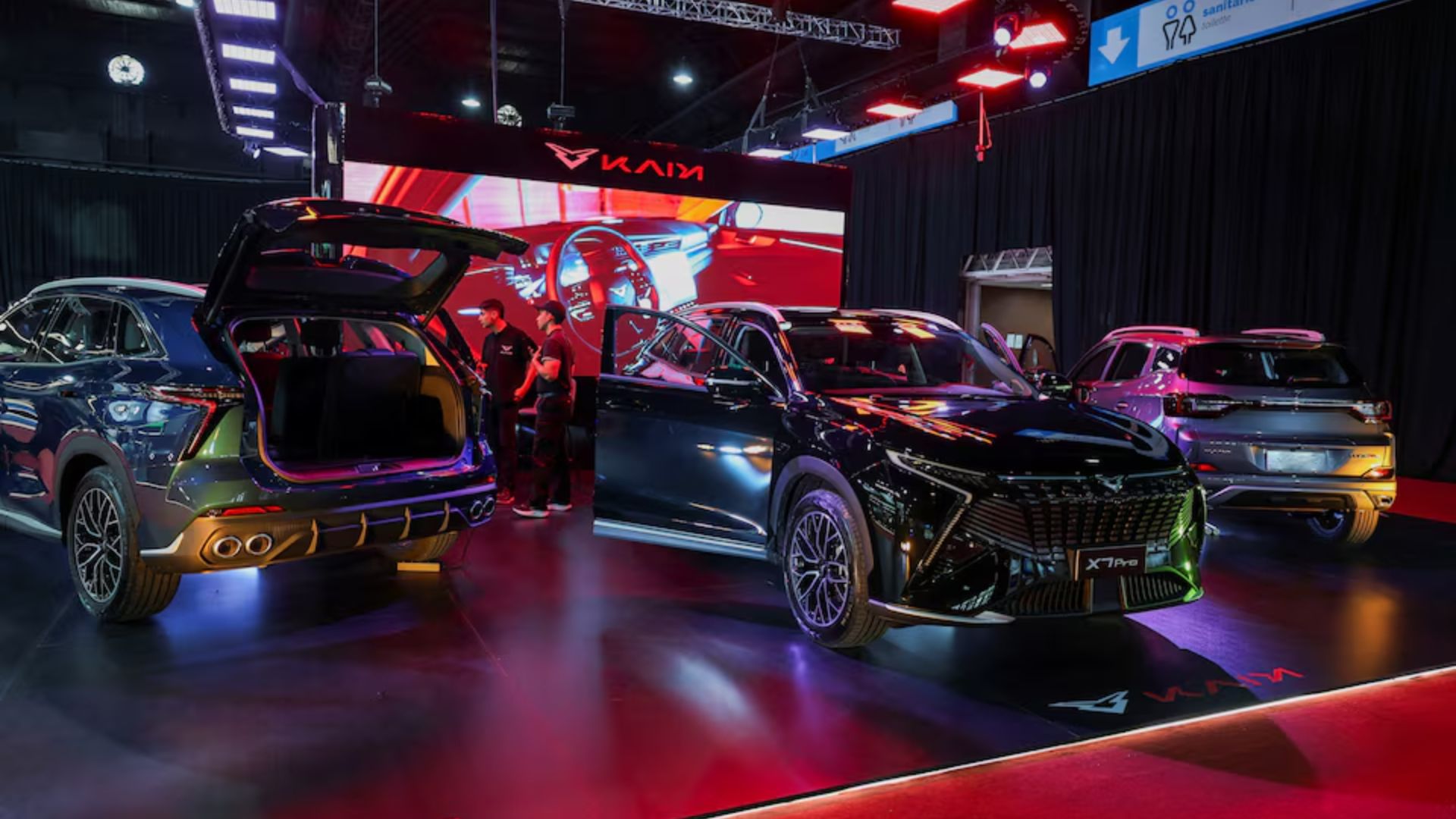
BUENOS AIRES, (Reuters) – Buenos Aires is hosting its first Chinese auto show on Friday as Argentina’s car market under President Javier Milei has shifted from heavy protectionism to a more open and competitive environment.
Chinese brands are flooding the market, benefiting from a measure that allows in up to 50,000 electric and hybrid vehicles without tariffs in 2026. Chinese brands accounted for 10% of car and light commercial vehicle sales in Argentina in August, up from about 2% late last year.
Since launching in Argentina in late 2025, China’s electric vehicle maker BYD has become the ninth best-selling car brand. The company leads electric car sales in Brazil, Colombia, Ecuador and Uruguay.
At the auto show, more than 20 Chinese brands, including Geely, Chery, GWM and Dongfeng, were on display. German Molina, a 3D designer who already owns a Chinese car and wants to buy another, looked around with his wife and son.
“If you go out onto the main avenues or neighborhoods, you see a large number of Chinese cars, and it’s not just one brand, but many different ones,” said Molina. “I believe it’s only a matter of time before people start embracing them a bit more.”
Sebastian Beato, president of Argentina’s auto dealers’ association ACARA, said the “impressive” growth among Chinese brands had pushed the national industry to produce new models, such as the Renault Niagara pick-up truck unveiled in September.
Earlier this week the Argentine government said Japanese automaker Toyota Motor would invest $1.34 billion to develop an EV plant in Argentina.
If Argentina’s auto industry doesn’t transform, “it’s going to have obsolete cars,” Beato said.
MILEI UNCONCERNED
Chinese automakers are steadily expanding across Latin America, selling both traditional vehicles and EVs at a pace that has alarmed some local markets.
Brazil and Mexico have introduced tariffs aimed at slowing the influx and protecting domestic manufacturing jobs. But Milei, a libertarian, has said he is unconcerned by the rapid growth of BYD and dismissed suggestions that it could complicate his close relationship with the US during an interview last month.
“What Argentines buy is the problem of Argentines,” Milei told Bloomberg at the Economic Club of New York.
Tesla in July launched operations in Uruguay, and there are signs the US automaker could soon enter Argentina.
The registration of Tesla Argentina appeared in the country’s official gazette in April, and state energy company YPF said in June it had signed a letter of intent with Tesla to explore energy storage opportunities.
Tesla did not respond to a request for comment.
‘POSSIBILITY TO COMPETE’
Car sales in Argentina have fallen 13% so far this year from the same period in 2025, a decline that industry analysts attribute to a market adjustment after last year’s strong growth was fueled by lower trade barriers. High interest rates have also dissuaded consumers from taking out car loans.
Andres Civetta, an economist at consultancy Abeceb, said Argentina’s auto industry should focus on pick-up trucks, where the country has established a strong export position and doesn’t yet face competition from Chinese brands.
Fernando Rodriguez Canedo, executive director of Argentina’s association of car factories, welcomed Milei’s gradual rollback of national export duties and said the industry was also pressing provincial governments to reduce local taxes.
“That would give us the possibility to compete,” Canedo said.
Reporting by Leila Miller in Buenos Aires; Additional reporting by Candelaria Grimberg; Editing by Lucinda Elliott and Sanjeev Miglani