

By WAF Think Tank
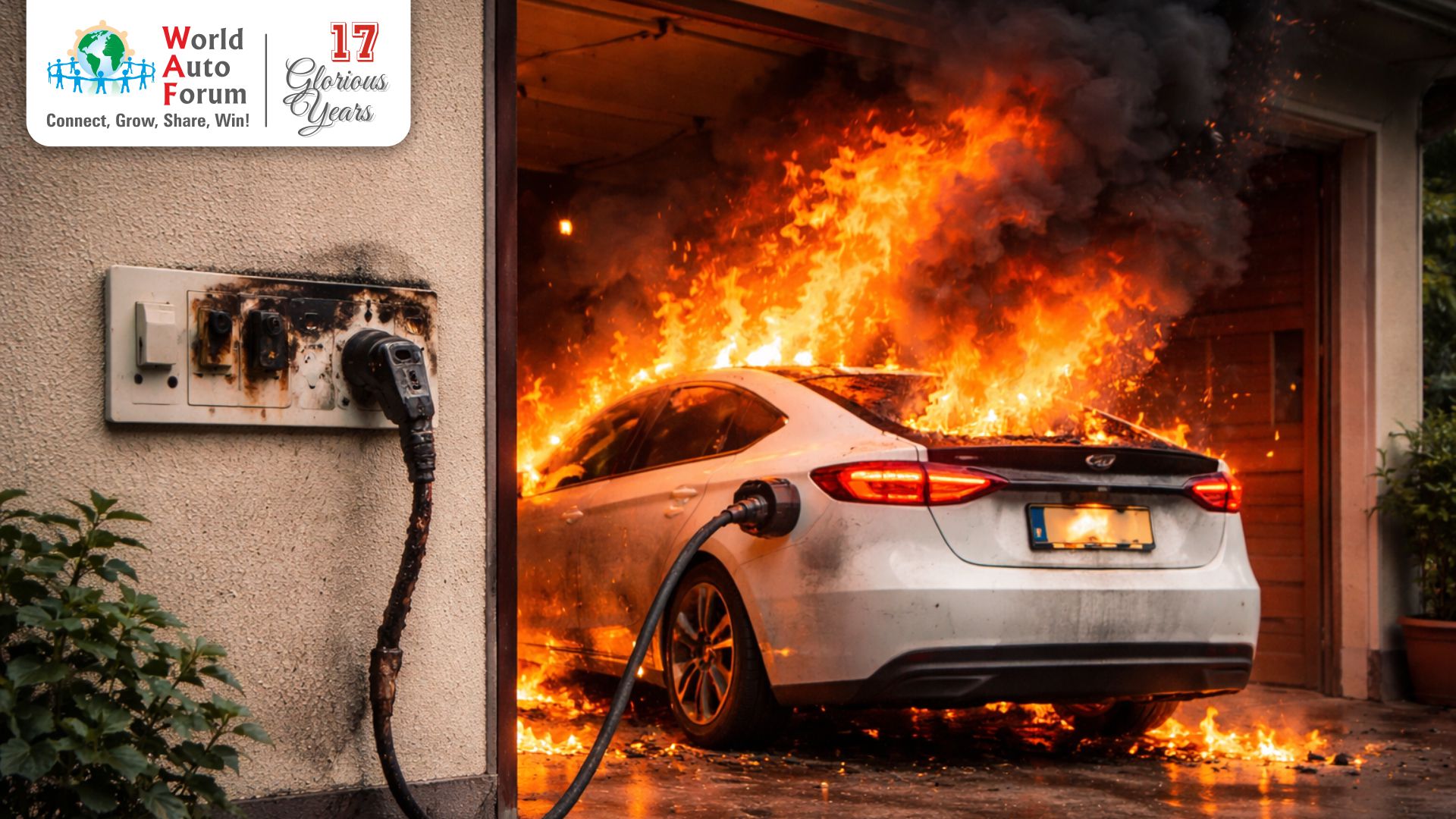
The tragic loss of lives in Indore due to an EV charging-linked fire is not just an isolated incident—it is a systemic warning. As India accelerates towards electrification, safety cannot lag innovation.
This is not about blaming EVs. It is about fixing the ecosystem gaps—in infrastructure, regulation, product standards, and user behavior.
Let’s get brutally honest.
🔥 What Likely Went Wrong (System View)
Early indicators from such incidents typically point to a combination of:
-
Improper home charging setups
-
Substandard wiring / overloading
-
Thermal runaway in batteries (especially 2W/3W)
-
Lack of fire isolation in parking areas
-
No early warning systems (smoke/heat sensors)
In India, EV adoption is outpacing safety readiness.
Anuj Guglani, CEO WAF Group commented, “Using regular household plugs for EV charging is a risk we must actively discourage. Most homes aren’t designed for sustained high loads—wiring may be outdated, and essential protections like MCBs may be absent.”
He added, “Just as elevators run on dedicated electrical lines, EVs too deserve a separate, properly rated connection—drawn directly from the meter and paired with a certified charger, using high-quality, waterproof and fire-resistant wiring.”
🛠️ WAF Think Tank: 5 Reform Pillars for EV Safety
1. ⚡ Mandatory Certified Home Charging Infrastructure
Problem: People plug EVs into legacy wiring never designed for sustained high loads.
Reform:
-
Mandatory certified EV charging audit before installation
-
BIS-approved smart chargers only
-
Dedicated circuit + MCB + earthing compulsory
WAF View:
“No Proper EV Charger, No Proper Wiring, No Compliance = No vehicle delivery.”
OEMs must own this.
2. 🔋 Battery Safety Certification 2.0
Problem: Battery packs vary wildly in quality—especially in 2W/3W segment.
Reform:
-
Real-world thermal stress testing, not just lab compliance
-
Mandatory cell traceability
-
Public battery safety rating (like NCAP)
WAF View:
India needs a “Battery Safety Index” consumers can understand.
3. 🏢 EV Parking & Charging Fire Norms for Buildings
Problem: Basement parking = death trap in fire situations.
Reform:
-
Separate EV charging zones with fire barriers
-
Mandatory smoke extraction systems
-
Fire-resistant cabling + automatic cut-off systems
-
Retrofitting guidelines for existing societies
WAF View:
Urban India is sitting on a silent risk. RWAs must act now.
4. 🚨 Early Warning & Suppression Systems
Problem: Fires escalate before detection.
Reform:
-
Mandatory thermal sensors near charging points
-
AI-enabled battery anomaly alerts
-
EV-specific fire extinguishers (not standard ones)
WAF View:
Prevention is good. Early detection saves lives.
5. 🧠 Customer Behaviour Reset
This is the most ignored—and most critical—pillar.
What must change:
-
❌ No overnight charging in enclosed spaces without safeguards
-
❌ No use of extension cords / jugaad wiring
-
❌ No parking immediately after a hard ride (let battery cool)
-
❌ No charging damaged or flooded vehicles
-
✅ Use only OEM-approved chargers
-
✅ Install smoke detectors in parking areas
-
✅ Periodically inspect wiring
WAF View:
“EV ownership is not plug-and-play yet. It demands awareness.”
🏭 OEM & Industry Accountability
Let’s be clear:
-
Selling EVs without charging ecosystem readiness is irresponsible
-
Dealer delivery should include safety onboarding
-
Apps must include real-time battery health alerts
Opportunity:
Safety can be a brand differentiator.
🏛️ Policy Makers: Time to Move Faster
India has done well on EV incentives.
Now we need equal urgency on:
-
Safety regulations
-
Enforcement
-
Public awareness
WAF Think Tank Recommendation:
Create a National EV Safety Mission with:
-
OEMs
-
Fire departments
-
DISCOMs
-
Urban planners
⚡ The Hard Truth
EVs are the future.
But unsafe EV ecosystems can slow adoption and erode trust overnight.
🏁 WAF Closing Line
“Electrification without safety is acceleration towards risk.
India must charge ahead—but safely.”