

Summary
- Large-scale of Eva Cab delivery, deployment expected from 2028
- Geely’s purpose‑built robotaxi would be cost-effective, CEO says
- Only 3-4 robotaxi firms would survive in China by 2030
BEIJING, (Reuters) – Caocao Inc the ride-hailing arm of Chinese automaker Geely Holding Group (GEELY.UL), plans to deploy thousands of robotaxis globally next year, its CEO said on Friday, setting up a potential rivalry with Tesla’s Cybercab.
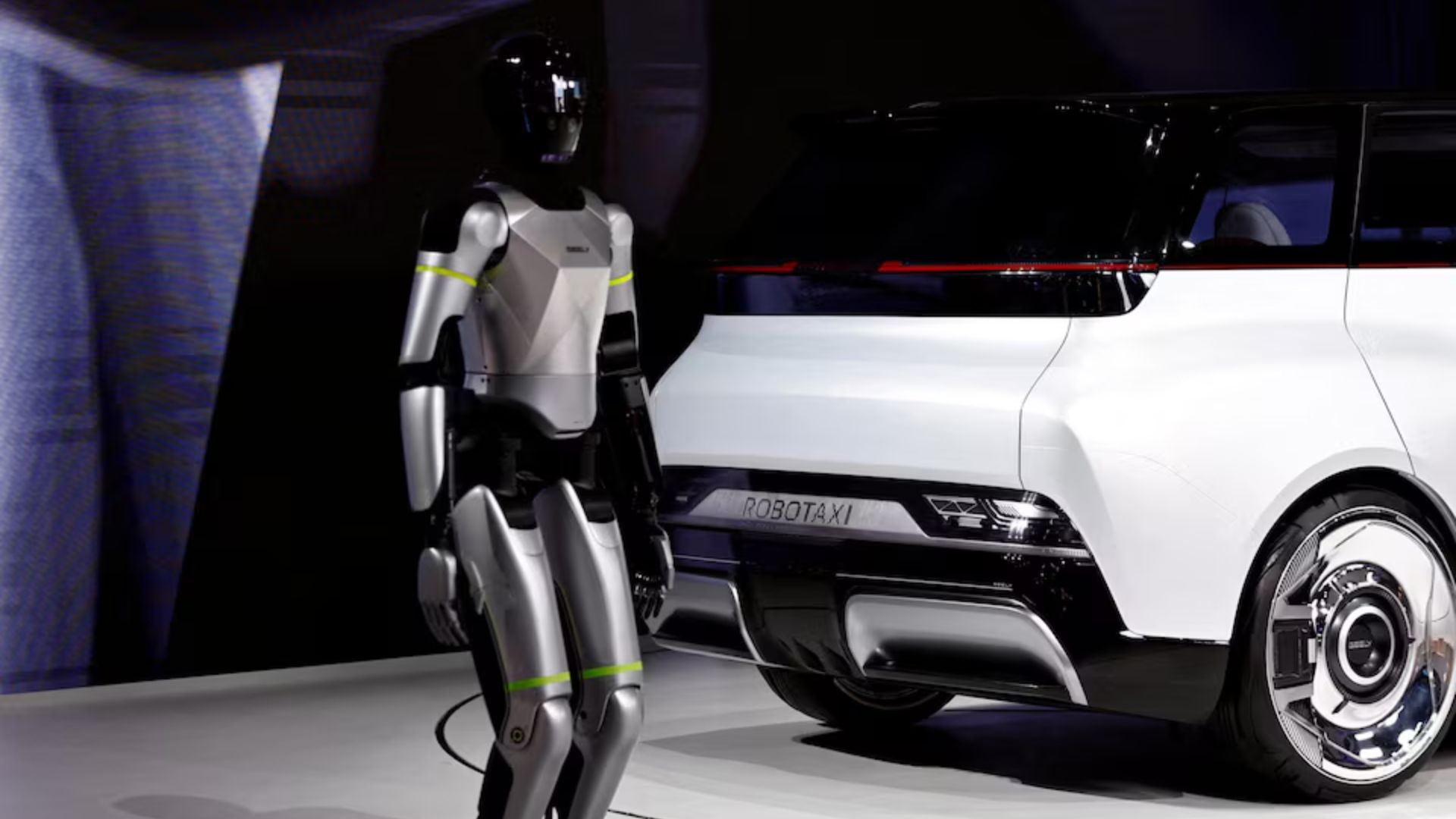
Large-scale delivery and deployment of the Geely-made purpose-built robotaxi Eva Cab is expected in 2028 before the fleet expands to 100,000 by 2030, Caocao CEO Gong Xin told Reuters during the Beijing auto show.
The Eva Cab will initially be put on the roads of Abu Dhabi, Hong Kong and five mainland Chinese cities next year, he said, adding that production, delivery and deployment would be almost simultaneous.
The purpose‑built robotaxi features a reconfigured cabin with simplified storage and no enclosed door pockets, reducing the risk of passengers leaving belongings behind.
The cost of the driverless cars without a luxury interior and a high-power motor would be lower than that of private cars, Gong said, without disclosing the exact price.
The approach contrasts with most robotaxis currently on public roads, which are typically modified versions of mass‑market vehicles, limiting interior optimisation and cost control at scale.
Caocao was incubated by Geely Holding in 2015 and positioned as its core platform for shared mobility and future robotaxi operations. Listed in Hong Kong in June 2025, it achieved its first-ever quarterly adjusted net profit in the fourth quarter.
The operator of China’s second-largest ride-hailing platform after Didi “has a very big advantage,” aligning its overseas push with Geely Holding’s global expansion, Gong said.
With Geely’s strong backing, Caocao would be one of the three to four robotaxi firms surviving in China by 2030, he said.
The deployment push comes as Chinese automakers move toward autonomous driving and mobility services amid intensifying competition in the world’s largest auto market.
Xpeng will likely produce hundreds to thousands of robotaxis over the next 12 to 18 months, president Brian Gu told Reuters on Thursday.
Xpeng’s initial focus will be on robotaxi manufacturing, and it still needs to find operating partners that can collaborate on a global robotaxi business, he said.
The diversification of Chinese manufacturers toward robotaxis points to a showdown with Tesla, which is rolling out its own purpose-built autonomous vehicle, the Cybercab.
Elon Musk has said Cybercab production will ramp gradually before scaling sharply, with the vehicles expected to replace modified consumer cars as Tesla expands its driverless fleet.
Reporting by Qiaoyi Li and Liz Lee; Editing by Himani Sarkar and Tomasz Janowski