
The government is working to permit ethanol blending beyond the existing E20 level, enabled through flexi-fuel vehicles, Advisor to the Prime Minister Tarun Kapoor said on Wednesday.
Addressing virtually the fourth edition of The India Sugar & Bio-Energy Conference 2026, Kapoor said the E20 programme has been “very successful” so far and several automobile companies have announced plans to roll out flexi-fuel vehicles soon.
“E20 has been very successful. Now our focus is on going into flexi-fuel vehicles and allowing blending at a percentage which will be higher than E20 and it will have to be through flexi-fuel vehicles,” Kapoor said.
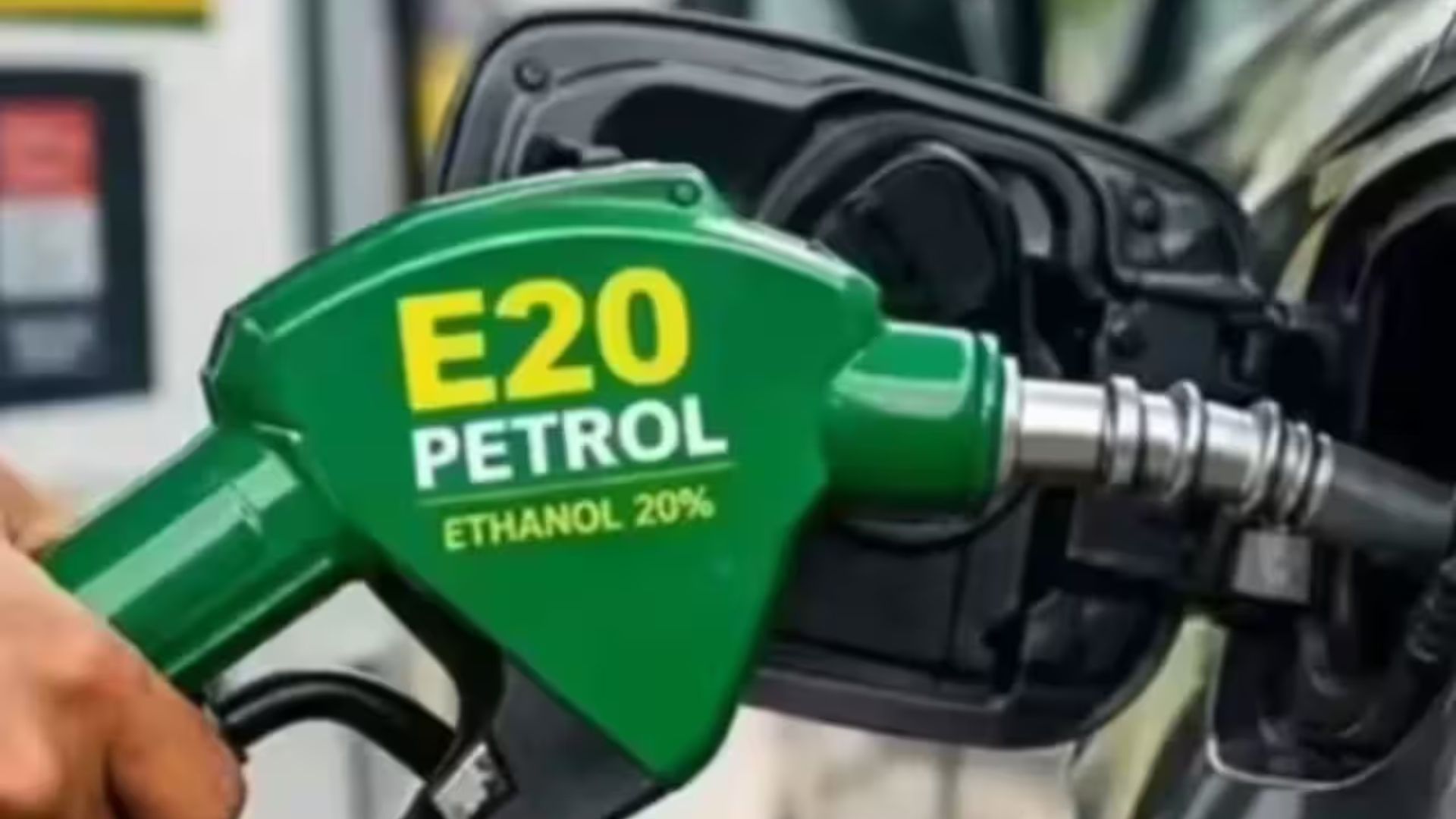
E20 is blended petrol containing 80 per cent petrol and 20 per cent ethanol.
He said biofuels and other alternative energy sources are very important for India, and government policies are now focused on promoting biofuels on a large scale. “The industry has also been very supportive and we’ve got huge capacities,” he said.
The push for biofuels has become more critical amid the West Asia crisis, which has disrupted supplies and pushed crude oil prices to nearly USD 100 a barrel, with fears of a further increase, Kapoor said.
“It is important that we try to have whatever is available in the country,” he said.
Ethanol production capacity in the country has surpassed blending requirements, he said, and the industry will need to explore additional uses for ethanol to fully utilise the surplus capacity.
While ethanol has been a great success story, criticism of E20 blending has largely stemmed from misinformation or “motivated reasons”, Kapoor said.
“But then a lot of studies have been done, a lot of experiments have been done, and it has come out that E20 is quite good and works very well. Maybe a little bit of fuel efficiency declines somewhere, but it gets compensated with higher octane,” he said, adding that the issues being faced are generally due to other reasons, not the blending.
Several motor vehicle companies have announced that they are coming up with flexi-fuel vehicles very soon, “and so we should see good numbers in the market,” he said, adding that supply of pure ethanol and related additives at petrol stations also needs to expand in tandem with availability of flexi-fuel vehicles.
“So with that then at least in this sector, in the transport sector we should see more traction,” he said.
On the diesel segment, Kapoor said the government is looking at biofuel-based additives, noting that experiments with isobutanol could open up a “large” new avenue for biofuels if successful, given diesel’s significant share of refinery output.
Products derived from ethanol or close to it — made from sugarcane residues, byproducts, or surplus foodgrains — are finding good market uptake, he said, helping the country fully utilise capacity that has come up.
“We are very keen that we are able to expand the market as much as possible so that this overcapacity issue is resolved at the earliest,” he said.
The West Asia crisis has made biofuel promotion even more important, he said, as it has become difficult to ensure continuous food supplies, with prices rising and crude nearing USD 100 a barrel. “So, therefore it is important that we try to have whatever is available in the country,” he said.
Kapoor also referred to the government’s GOBARdhan scheme, which brings together incentives from various ministries to promote compressed biogas (CBG), an area where progress has been limited so far.
He urged ethanol manufacturers to also take up compressed biogas production. “That will be something very good,” he said, adding that all biofuel manufacturers must try to maximise their products, including by-products such as potash.
“We should try to maximise so that the value addition is maximised and also we are able to supply to the country fuels which are so much needed at the moment,” Kapoor said.
“I also assure all of you that from the government side we are totally committed to biofuels. And we want to promote; we want the market to grow so that the capacity which has been created, whatever investments have been made, those investments don’t have any challenges, or they don’t have any anxieties.”