

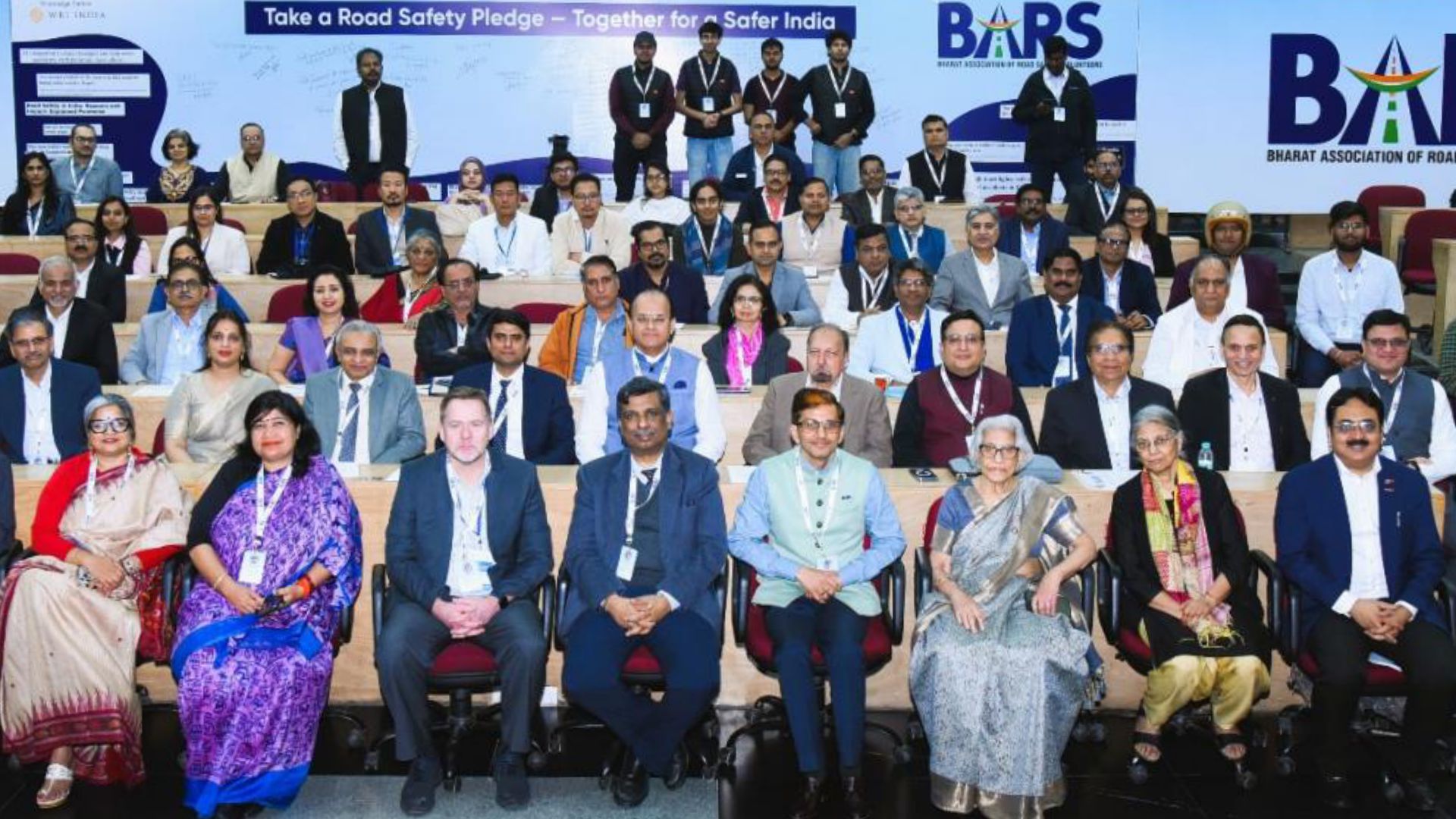
National Road Safety Confluence at IIT Delhi Unites Government, Industry and Civil Society for Measurable Action.
India has committed to reducing road fatalities and serious injuries by at least 50% by 2030, with a long-term goal of achieving Zero Preventable Road Fatalities, under the newly launched New Delhi Road Safety Declaration at IIT Delhi.
The Declaration aligns with the WHO Decade of Action for Road Safety (2021-2030) and marks a decisive shift from awareness-driven campaigns to measurable, accountable implementation.
The National Road Safety Confluence brought together representatives from the Ministry of Road Transport & Highways, WHO, state governments, enforcement agencies, industry bodies, OEMs, insurers, civil society, academia and youth groups – under a collaborative framework of Samaaj (Society), Sarkaar (Government) and Bazaar (Industry).
The inaugural session was graced by Dr. Mats-Åke Belin, Global Lead – Decade of Action for Road Safety, World Health Organization (WHO), who stated: “Road safety is now firmly on the global agenda, with strong political and media attention. Our responsibility is to move beyond awareness and ensure consistent, evidence-based implementation so that no country is left behind in preventing road traffic deaths”.
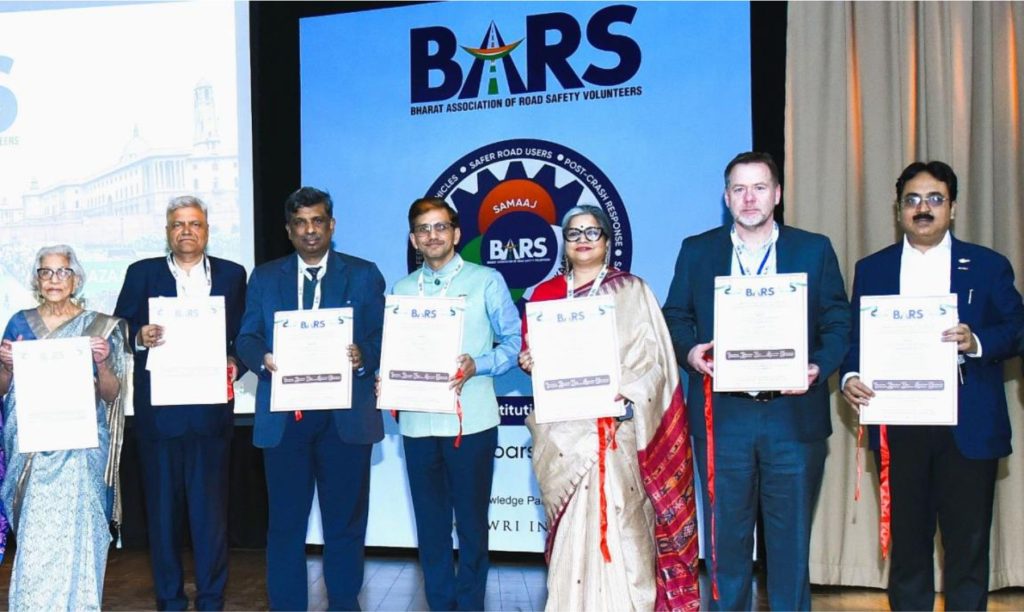
Sh. V. Umashankar, Secretary (Road Transport & Highways), Ministry of Road Transport & Highways, Government of India emphasized: “As a nation, we cannot accept road fatalities as inevitable. Each accident is personal, each loss preventable. Awareness is not enough – what we need is organised, district-level action, backed by certainty of enforcement and supported by strong institutions. When compliance becomes habit and accountability becomes certain, road safety will move from intention to impact.”
The Confluence was hosted by BARS – Bharat Association of Road Safety Volunteers, an independent, science-driven institution bringing together Samaaj (civil society), Sarkaar (government), and Bazaar (industry) to scale effective road safety practices across India.

Speaking at the Confluence, Rama Shankar Pandey, Chairman – BARS, said, “Road safety is not merely a transport issue; it is a governance responsibility and a moral obligation. The New Delhi Declaration shifts the national conversation from fragmented initiatives to coordinated, time-bound, accountable action.”

India continues to record the highest number of road fatalities globally, with vulnerable road users – pedestrians, cyclists, two-wheeler riders, gig workers and rural communities disproportionately affected.
Despite multiple initiatives, systemic gaps remain:
• Infrastructure progress measured in kilometers, not lives saved
• Fragmented accountability across agencies
• Weak licensing and driver training systems
• Under-utilized Crash data
• Inadequate emergency response integration
• Limited two-wheeler safety technology
The Declaration adopts a Safe System Approach, placing human life at the center of mobility decisions.

The Declaration outlines five core pillars:
1. Governance & Accountability:
Shift performance metrics from road construction to lives saved; strengthen Unified Road Safety Authorities at state level; democratize District Road Safety Committees; ensure annual independent monitoring.
2. Safer Vehicles & Fleets:
Eliminate sub-standard components; localize safety technologies for Indian conditions; expand safety for two-wheelers; integrate AI-enabled enforcement and insurance-linked safety scoring.
3. Safer Road Users:
Mandatory practical driver training; strengthened licensing procedures; behavioural reform through school and higher education; strict penalties for repeat violations.
4. Post-Crash Response:
Golden Hour optimization; standardized crash investigation focused on root causes; CPR training in high-risk zones; improved trauma care and rehabilitation support.
5. Safer Infrastructure & Blackspot Management:
Continuous data-driven mapping of blackspots; zero tolerance for unsafe design; safety audits of existing infrastructure; focus on rural and peri-urban crash clusters.
BARS emphasizes that it is not an implementing agency, funding body, or political
entity, but a neutral platform fostering collaboration, knowledge-sharing, and
measurable action.
Participants included representatives from government ministries, WHO and multilateral agencies, civil society, academia, industry bodies, OEMs, insurers, technology innovators, and youth groups. Closed-door sessions focused on implementation pathways, measurable targets, and district-level acceleration strategies.
Signatories commit to time-bound action plans, annual independent monitoring, strengthening district-level enforcement capacity, prioritizing vulnerable road users, and aligning ESG and insurance frameworks with safety outcomes. The Declaration remains open for endorsement across Samaaj, Sarkaar, and Bazaar.The confluence had WRI as its knowledge partner.