
India’s public transport sector is quietly witnessing one of its biggest technology transformations.
At Prawaas 5.0, held in Gandhinagar, leading bus manufacturers showcased a new generation of products that go far beyond simply moving passengers from Point A to Point B. The event reflected an industry that is rapidly embracing electrification, cleaner fuels, intelligent safety, digital connectivity and premium passenger experiences.
A New Battle is Brewing
The exhibition floor resembled a technology battleground.
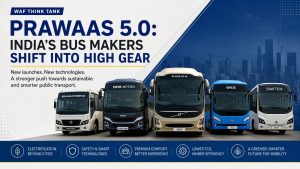
Established giants like Tata Motors, Volvo Buses, JBM, BharatBenz, Switch Mobility, and emerging challenger EKA Mobility all unveiled products aimed at winning India’s next decade of public mobility.
Unlike earlier years where capacity and pricing dominated discussions, this year’s launches revolved around:
- Electric mobility
- CNG-powered solutions
- Smart safety systems
- Premium intercity travel
- School transportation
- Fleet operating efficiency
- Lower total cost of ownership
The message was clear: the future of buses will be defined as much by software, sustainability and passenger experience as by horsepower.
Tata Raises the Bar
Tata Motors arrived with one of the most comprehensive showcases.
Among the highlights were the all-new Ultra Prime and Starbus Prime ranges, alongside the Ultra Skool 9/9 EV, LPO 1620 CNG, Magic EV, and new premium mobility concepts.
The company’s portfolio covered virtually every passenger mobility application—from school buses and staff transport to tourism, intercity operations and urban commuting—signalling Tata’s intent to remain the benchmark across multiple segments.
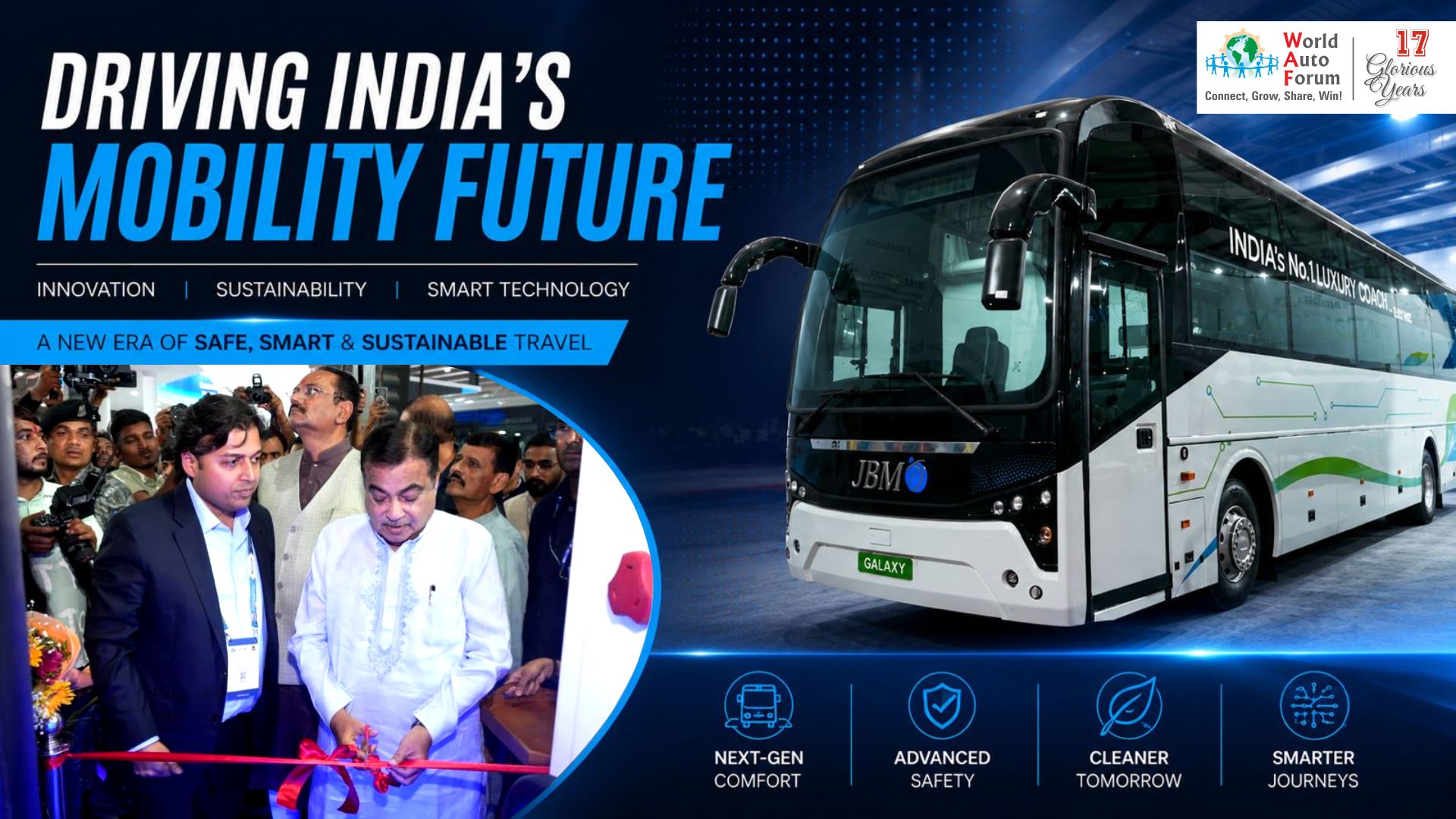
JBM surprises everyone with the Galaxy!
JBM Electric Vehicles (JBM EV) launched the next generation ‘GALAXY’ electric luxury coach at Prawaas 5.0. The vehicle was launched by Shri Nitin Gadkari, Hon’ble Union Minister of Transport & Highways in the august presence of Shri Nishant Arya, Chairman, JBM Electric Vehicles.
Electrification Moves Beyond City Buses
One noticeable trend at Prawaas 5.0 was that electric mobility is no longer confined to city buses.
Manufacturers showcased products for:
- School transportation
- Tourism
- Staff mobility
- Intercity operations
- Last-mile connectivity
EKA Mobility’s newly introduced 9-metre electric school bus is another example of how specialised EV applications are beginning to emerge within India’s commercial vehicle ecosystem.
Competition Benefits Fleet Operators
Anuj Guglani, CEO, WAF said,‘For fleet owners, transport corporations and institutional buyers, increasing competition among OEMs is likely to deliver significant advantages. Greater product choice, improved operating economics, enhanced safety technologies and cleaner propulsion systems are expected to accelerate fleet modernisation over the coming years.’
He further added,’As government policies continue encouraging sustainable public transport, manufacturers appear keen to differentiate themselves through technology rather than merely pricing.’
WAF Think Tank View
Prawaas 5.0 demonstrated that India’s bus industry is entering a new phase.
The conversation is no longer limited to diesel versus electric.
The next competitive frontier will revolve around:
- Connected fleets
- AI-enabled diagnostics
- Passenger comfort
- Fleet uptime
- Safety technologies
- Sustainable propulsion
- Lower lifecycle costs
For OEMs, this is an innovation race.
For operators, it creates wider choices.
For commuters, it promises safer, cleaner and smarter journeys.
And for India, it is another important step towards building a modern public transport ecosystem capable of supporting the country’s Viksit Bharat aspirations.