

New Delhi, June 5, 2026: Marking World Environment Day, the Society of Indian Automobile Manufacturers (SIAM) today organized the 6th International Conference on “Climate Action: Accelerating India’s Transition to a Low-Carbon Future,” reaffirming the Indian automobile industry’s commitment to sustainable development, climate responsibility and low-carbon mobility.
The conference brought together policymakers, industry leaders, academia, research institutions, and sustainability experts to discuss strategies for advancing climate action and accelerating the transition to sustainable mobility. Discussions focused on key decarbonization enablers for the entire automobile value chain, including alternate and low-carbon fuels, circular economy practices, and sustainable manufacturing.
As India progresses towards its climate commitments and sustainable development goals, participants highlighted mobility sector’s role in reducing emissions while supporting economic growth and energy security. They also exchanged perspectives on emerging technologies, policy frameworks, and collaborative approaches needed to build a resilient and environmentally sustainable transportation ecosystem.
The inaugural session, “Climate Action for India’s Sustainable Development Pathway,” highlighted the importance of clean mobility, low-carbon fuels, resource efficiency, circularity and green manufacturing in supporting India’s transition to a net-zero future. Speakers emphasized the need for continued innovation, investment, and multi-stakeholder collaboration to accelerate sustainable mobility solutions.
The conference reaffirmed SIAM’s commitment to promoting industry collaboration and supporting policies and technologies that contribute to a sustainable, low-carbon future for India.
In his opening remarks, Mr. Prashant K. Banerjee, Executive Director, SIAM, said, “We are living through a time of unprecedented challenges, from climate change and air pollution to energy security concerns. But every challenge also creates an opportunity and as the world’s largest market for two-wheelers and three-wheelers, India has already demonstrated remarkable progress in sustainable mobility. At SIAM, we remain committed to building the nation responsibly and supporting the Government of India’s decarbonisation journey.”
Chief Guest Mr. Tarun Kapoor, Advisor to the Hon’ble Prime Minister of India, said, “The transport sector must play a central role in strengthening India’s energy security. We cannot continue to depend on large-scale fuel imports and, over time, must move towards fuels that can be produced within the country. While three-wheelers are ready for rapid electrification, we need much faster adoption in the four-wheeler segment as well. India is advancing multiple clean and alternative fuel pathways, including biofuels, ethanol and isobutanol blends, flex-fuel technologies, compressed biogas, green hydrogen, LNG/CNG, electric mobility, and synthetic fuel options. In addition, coal gasification-based fuel pathways are also being explored as part of India’s broader effort to diversify domestic energy sources and strengthen clean mobility, energy security and decarbonisation outcomes.”
Guest of Honour Mr. Abhay Bakre, Mission Director, National Green Hydrogen Mission, Ministry of New & Renewable Energy, Government of India, said, “The industry deserves credit for accelerating India’s energy transition. One important lesson is that decisions on new technologies cannot be driven by today’s costs alone. We need to evaluate these solutions based on where they will be 10 years from now, because scale and adoption will gradually reduce costs. Another critical requirement is that vehicle deployment and charging infrastructure must grow together. Green hydrogen also presents a significant opportunity, and manufacturing fuel cells in India could be a game changer for the automotive sector.”
Mr. Harshavardhan Chitale, Chief Executive Officer, Hero MotoCorp Ltd., said, “ We have a shared responsibility to support India’s climate goals and build a cleaner future. The Government of India’s focus on reducing emissions provides a strong direction for all of us. We need to embed sustainability across our operations through responsible manufacturing, water conservation, waste reduction, product recyclability, and green dealerships. We are also advancing clean mobility through electric vehicles, flex-fuel technologies, and support for alternative fuels.”
Mr. Diego Graffi, Chairman, SIAM 3W CEOs Council and Chairman & Managing Director, Piaggio Vehicles Private Limited, said, ” The story of electrification in the three-wheeler category is not about scale, but about the speed of change. Electric three-wheelers have become a practical and reliable solution for millions of users. India is one of the most demanding mobility markets in the world, and solutions that succeed here at scale and at the right price point can succeed anywhere. Alongside shared mobility and public transport, the three-wheeler segment will continue to play an important role in India’s sustainable mobility future.”
Mr. Mahesh Babu, Managing Director, Olectra Greentech Ltd., said, “Reducing emissions through mobility is a significant challenge for India. Alongside decarbonisation, we must also focus on energy security and reducing our dependence on oil imports. We need to make the unit economics work for customers, to make large-scale adoption possible. For a country of more than a billion people, strengthening public transport will be critical to achieving the vision of a Viksit Bharat.”
Dr. Aanchal Jain, Chief Executive Officer, PMI Electro Mobility Solutions, said, “India stands at a defining moment, where economic growth and sustainability must progress together. As the country’s EV ecosystem continues to grow, public transport is undergoing a major transformation, with electric buses at the forefront of this change. We are proud to be contributing to this progress. The focus now must be on turning ambition into action and action into measurable impact, making electric mobility a practical solution for reducing emission intensity at scale.”
Dr. Reji Mathai, Director, The Automotive Research Association of India, said, ” The rapid growth of electric mobility have demonstrated that India can successfully advance cleaner transportation solutions with the right policy support and industry participation. At the same time, we must continue to explore a wider range of low-carbon fuel options and technologies. Going forward, stronger partnerships, collaborative research, and robust data will be essential to shaping effective policies and creating a clear roadmap for the sector.”
Mr. Subhankar Sen, Director (Marketing), Bharat Petroleum Corporation Ltd., said, “The automotive industry’s contribution to India’s economy is significant, and its role in the country’s sustainability goals is equally important. The progress made in ethanol blending over the past decade has been remarkable and has drawn global attention. India’s transition will be driven by a mix of technologies and fuels, supported by coordinated progress in technology, infrastructure, policy and consumer awareness.”
On this occasion, Mr. Sushant Naik, Chairman, SIAM Electric Mobility Group and Global Head – Government & Corporate Affairs, Chief Corporate Affairs Officer, Tata Motors Ltd., thanked the dignitaries present and said, “On the occasion of World Environment Day, it is encouraging to see that EVs now account for a growing share of vehicle sales in India, supported by favourable government policies and increasing consumer acceptance. India’s sustainability goals can only be achieved through close collaboration between industry and government, while creating greater awareness among consumers that sustainability is not just a choice, but a way of life.”
Session Highlights:
The first thematic session, “Circularity in the Automotive Sector: From Materials to End-of-Life Vehicles,” focused on circular economy practices across the automotive value chain, including sustainable sourcing, recycling, resource efficiency, and end-of-life vehicle management was addressed by Guest of Honour Dr. Virender Sharma, Member Technical (Additional Secretary to Government of India level), Commission for Air Quality management in National Capital Region and Adjoining Areas. The session was chaired by Mr. M S Anand Kumar, Chairperson, SIAM Recycling & Material Groups, and Assistant Vice President, TVS Motor Company, the session included presentations by Dr. Rashi Gupta, Founder & Managing Director, Vision Mechatronics; Mr. Bhuwan Purohit, Executive Director, Rubamin Pvt. Ltd.; Dr Swati Singh, Head of Regional Standards, South Asia (UL Standards and Engagements) and Mr. Abhijit Sen Roy, General Manager (TS), Indian Oil Corporation Ltd. (IOCL), who shared perspectives on sustainable technologies, EPR frameworks, and circular resource recovery.
The session also included a panel discussion on “Building a Circular Automotive Value Chain,” moderated by Mr. Sandeep Kumar Mohanty, Partner, PwC. The panel focused discussions related to strengthening recycling systems, improving material recovery, and enhancing collaboration to advance circularity in the automotive sector.
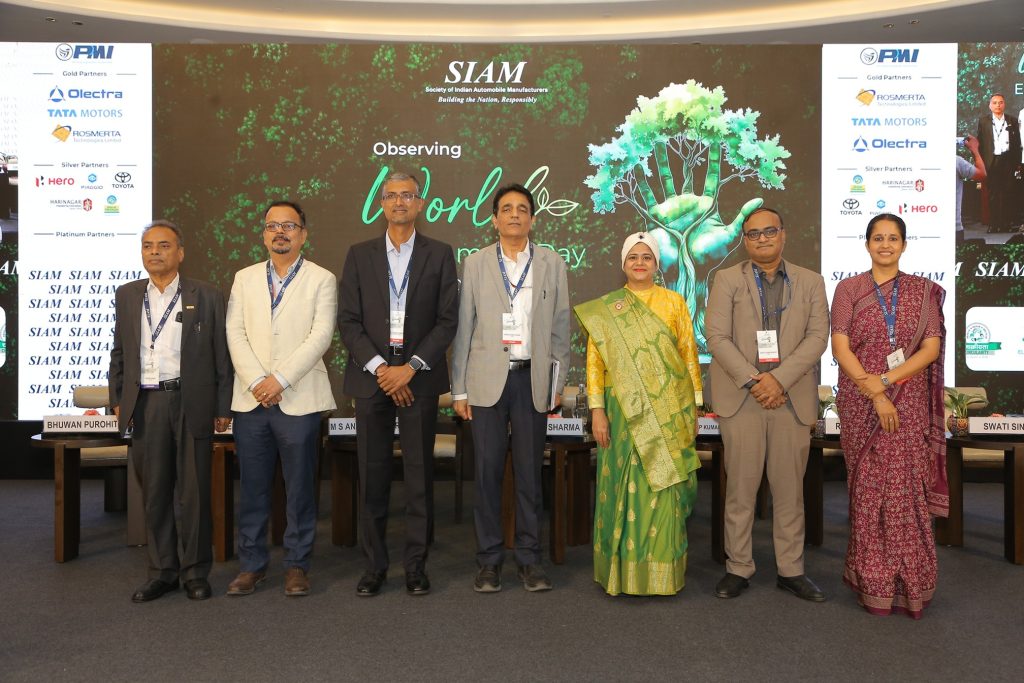
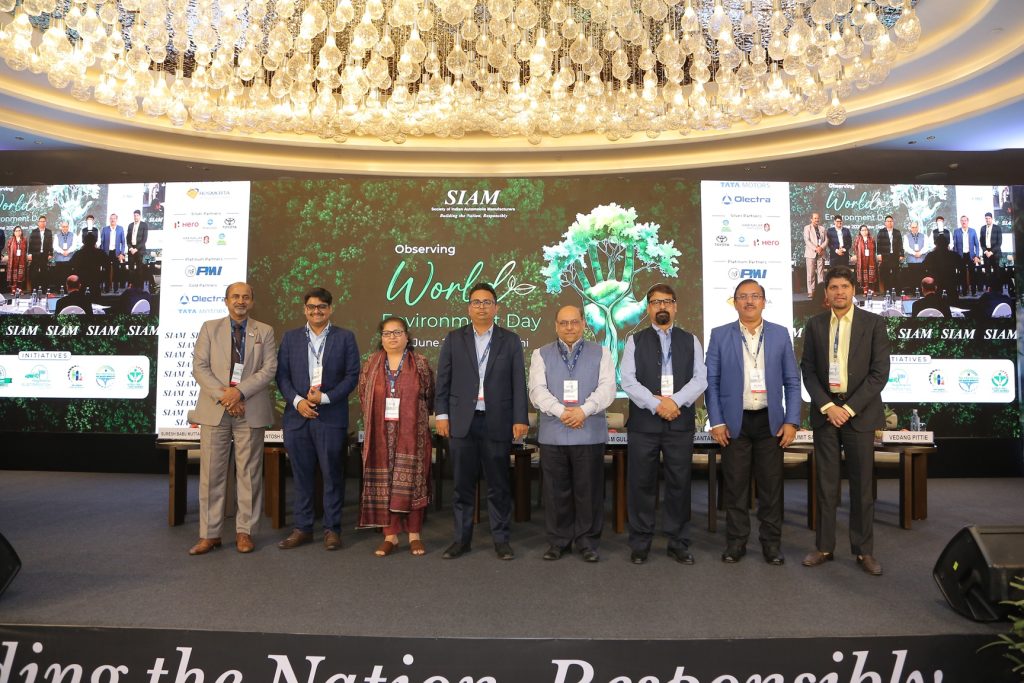
The second thematic session, “Alternate Fuels for Sustainable Mobility – Diversifying the Energy Mix: Pathways for Low-Carbon Fuels,” focused on the role of alternate fuels in reducing transport emissions and supporting India’s mobility transition. Chaired by Mr. Vikram Gulati, Country Head & EVP – Corporate Affairs & Governance, Toyota Kirloskar Motor Pvt. Ltd., the session included presentations by Dr. Santanu Gupta, Director Technical, Global Biofuels Alliance; Mr. Sumit Sarkar, Chief Executive Officer, Chhattisgarh Biofuel Development Authority; and Mr. Santosh Gurunath, Chief Executive Officer, Umagine Hydrogen Pvt. Ltd., who shared insights on global biofuel trends, agricultural residue-based fuels being developed, and elaborated on hydrogen as a pathway for low-carbon mobility.
A panel discussion on “Multi-Fuel Pathways to Achieve Sustainable Mobility,” moderated by Mr. Atul Jairaj, Partner, Deloitte India, brought together Ms. Suruchi Bhadwal, TERI; Mr. Vedang Pittie, Harinagar Sugar Mills Ltd.; along with the presenters and session chair. The discussion focused on the role of biofuels, hydrogen, and other low-carbon fuels, and the policy and infrastructure support needed to accelerate their adoption.
The third thematic session, “Decarbonizing the Automotive Value Chain: Green Manufacturing and Sustainable Supply Chains,” chaired by Mr Suneet Deshmukh, Head Operations Excellence, Hero MotoCorp Ltd., discussed strategies for reducing emissions across manufacturing operations and supply chains. The session included presentations by Ms. Chaitanya Kanuri, Director E-Mobility, WRI India; Mr. Mayur Karmarkar, Managing Director, International Copper Association India; and Mr. Mohit Jauhari, Head SCM, Shriram Pistons and Rings Ltd., who shared insights on copper, critical minerals, rare earth magnets and elaborated on sustainable supply chain practices.
The session also included a panel discussion on “Accelerating the Transition to a Low-Carbon Automotive Value Chain,” moderated by Mr. Pratik Shah, Partner, EY Parthenon. The panel brought together Mr. Parag Sharma, Stellantis; Lt Col Monish Ahuja (Retd), Punjab Renewable Energy Systems Pvt. Ltd. along with the session presenters. They discussed green manufacturing, renewable energy, sustainable sourcing, and supply chain decarbonization.
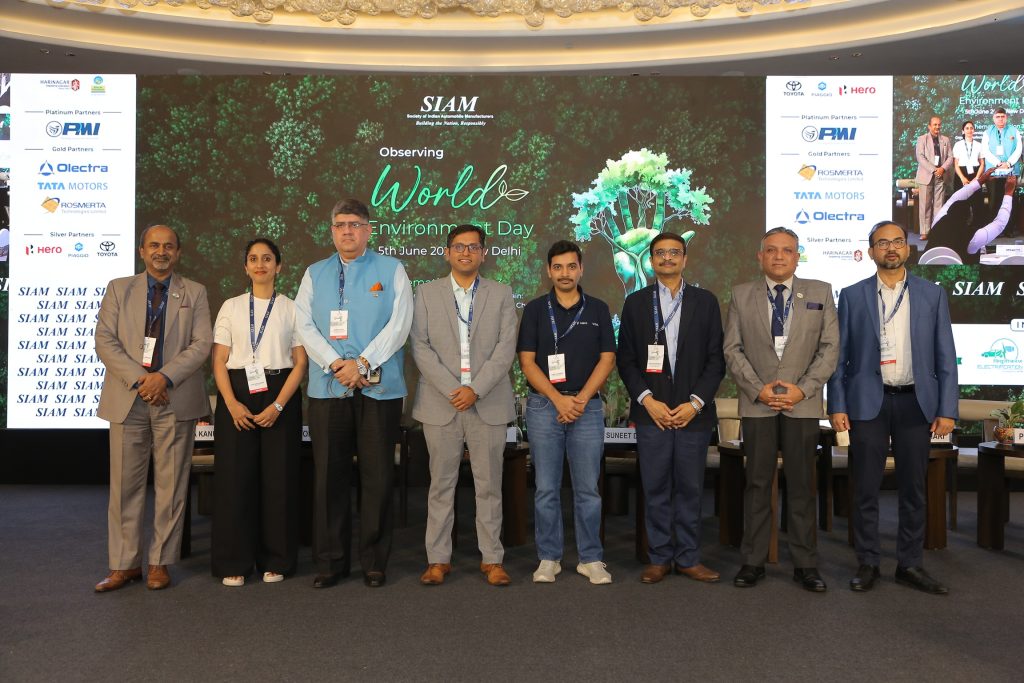
The deliberations throughout the event reinforced that for a diverse country like India, no single technology or fuel will be able to deliver India’s envisioned mobility transition, instead the progress will depend on parallel advances across electrification, alternate fuels, circular economy practices, and green manufacturing, backed by coordinated policy and industry action.
SIAM is advancing India’s carbon neutrality goal of 2070 and the Viksit Bharat vision by 2047 through several key decarbonisation initiatives. These include the electrification of mobility (विद्युतीकरण), promoting ethanol use in transportation (जैविक पहल), enhancing recycling practices (चक्रीयता), ensuring safe journey (सुरक्षित सफर), developing infrastructure for gas-based mobility (गैस गतिशीलता), and fostering the hydrogen fuel ecosystem (हरित हाइड्रोजन).