
Summary
- Tesla’s China-made EV sales rose 36% in April year-on-year
- Sixth straight monthly gain signals rebound after tough 2025
- FSD approval delays, Chinese rival launches may limit recovery momentum
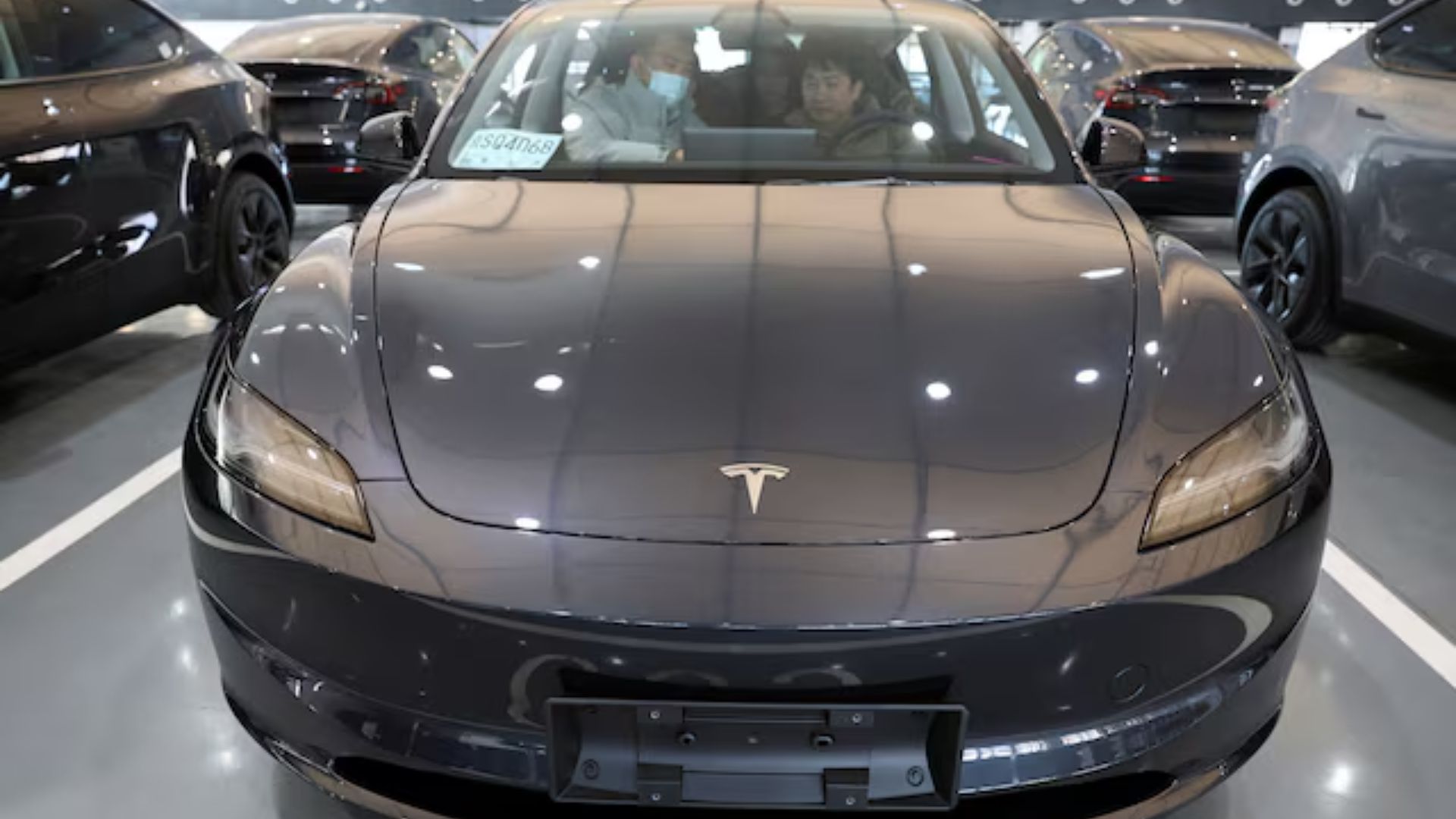
BEIJING,(Reuters) – Tesla China-made EV sales jumped 36% on the year in April, a sixth month of gains, as the U.S. automaker fights to hold ground against a wave of cheaper Chinese rivals.
Deliveries of Model 3 and Model Y vehicles built at Tesla’s Shanghai plant, including those exported to Europe and other markets, totaled 79,478 units, data from China Passenger Car Association showed on Thursday.
That was down 7.2% from March this year but well above April 2025 levels.
The figures suggest Tesla is stabilizing in its two most important markets outside the U.S. after a bruising stretch of market share losses, though regulatory delays around its Full Self-Driving software and new Chinese EVs may limit the recovery.
The U.S. automaker’s sales continued to recover last month in several European markets, including Sweden, France and Denmark. This was supported by stronger demand for battery EVs as oil prices spiked due to the U.S.-Iran conflict.
REGULATORY OBSTACLES, FSD APPROVAL REMAIN
Tesla faces regulatory obstacles, with the path toward approval of its Full Self-Driving (FSD) system highly valued by customers, particularly in China, still uncertain.
The company now expects to secure full FSD approval in China by the third quarter, CFO Vaibhav Taneja said in April, a delay from its initial target of the first quarter.
Emails from some European regulators reviewed by Reuters indicate EU scepticism toward the technology.
The recovery follows a punishing stretch for Tesla, which lost almost half its European market share in 2025.
Nevertheless, Tesla is stepping up efforts to defend its position against new Chinese models by developing a cheaper, compact SUV produced in China, Reuters reported last month.
Reporting by Qiaoyi Li and Ju-min Park, Editing by Bernadette Baum