

By Anuj Guglani
The Day a Rain-Soaked Scooter Changed Indian Automotive History
It was a rainy November afternoon in 2002.
Ratan N Tata sat in the back seat of his chauffeur-driven luxury sedan, watching the road ahead blur under sheets of rain.
Then he saw them.
A man on a scooter.
A woman clutching a child in her lap.
Another child standing precariously near the handlebar.
Soaked. Shivering. Exposed.
Mr Tata softly told his driver, “Slow down… it could be slippery.”
Seconds later, the scooter skidded.
The family was flung across the road.
Mr Tata would later say that had his car been even a little faster, he might have run them over.
That moment shook him.
He returned to his office and summoned his Tata Motors leadership team for an urgent meeting.
His brief was just one line—simple, humane, audacious:
“Why can’t we give a safe, affordable car at the price of a two-wheeler?”
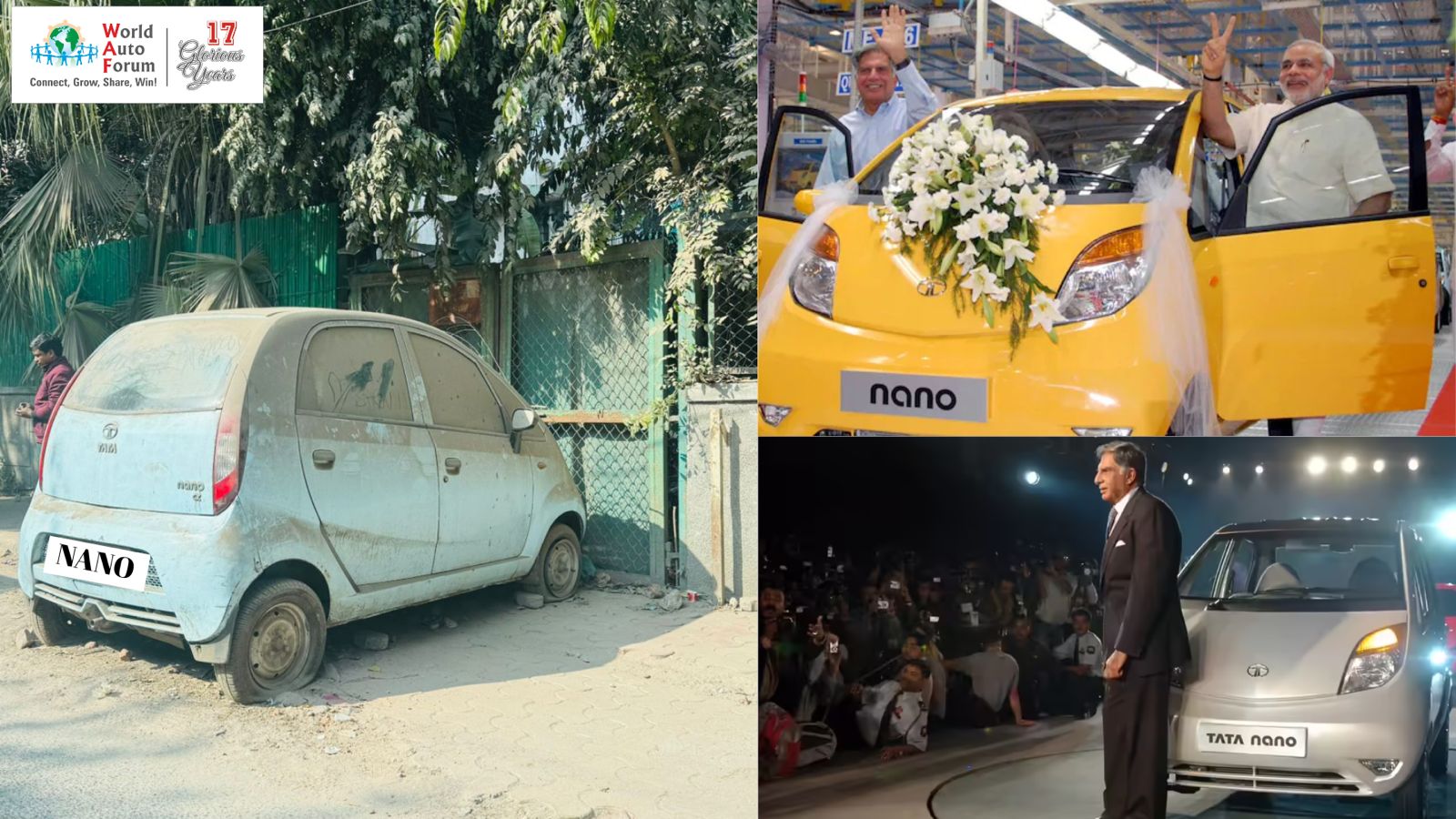
That day, the Tata Nano was born.
Nano: Engineering Brilliance with a Social Soul
Tata Motors went all-in.
Over 70 patents.
Radical frugal engineering.
A symbolic target price of ₹1 lakh (about $2,500 at the time).
The world witnessed something unprecedented:
- A 2-cylinder, rear-mounted engine
- A remarkably smooth ride, thanks to a single eccentric balance shaft
- Innovation driven not by luxury—but by empathy
This wasn’t just a car.
It was a mission on wheels.
From Singur Storms to Sanand Speed
The Nano was meant to roll out of Singur, West Bengal.
Politics intervened. Chaos followed.
During that turbulence, I once met Mr Ratan Tata.
He was being hounded by the media.
He didn’t argue. He didn’t complain.
He let action speak louder than outrage.
Enter Gujarat.
Mr Narendra Modi, then Chief Minister, invited Tata Motors to Sanand.
From first meeting to first car rollout—fast-tracked with intent.
The Nano found its new home.
The Launch That Took India by Storm
January 10, 2008.
New Delhi Auto Expo.
Three Tata Nanos drove onto the stage.
One was driven by Ratan Tata himself.
What followed was nothing short of history:
- 200,000 bookings
- A nationwide Nano wave
- Wall-to-wall media coverage
In a country that lives on two wheels…
anything that promises dignity, safety, and shelter from rain creates a tsunami.
How a Marketing Campaign Killed a Brilliant Innovation
And yet… this is where it all went wrong.
Indians don’t buy just products.
We buy aspiration.
We worship netas and abhinetas because they sell us dreams—not realities.
But Nano’s ads showed:
- A bus driver walking toward his Nano after a shift
- A drenched scooter family “settling” for a Nano
It was too literal.
Too honest.
Too small a dream.
I once dined at a tech billionaire’s Delhi home.
Pointing to his garage, he smiled and said:
“That’s my Khan Market car. I drive it myself for quick errands.”
That should have been the Nano story.
RIP Nano… Or Just a Long Pause?
Early numbers were encouraging.
Then aspiration collapsed.
Even Ratan Tata was deeply upset.
For perhaps the first time in Tata history, heads rolled.
Fire incidents made matters worse.
Perception turned poisonous.
When Cyrus Mistry took over, the Nano was seen as:
- A resource drain
- A turnaround blocker
By April 2020, Nano was officially discontinued.
No BS-VI upgrade.
No second chance.
The Question Tata Motors Must Ask—Now
Look at our cities today:
- Choked roads
- Shrinking parking
- Rising fuel costs
- EV adoption accelerating
Isn’t the Nano more relevant than ever?
People forget.
Generations change.
With the right positioning, Gen Z and Gen Alpha can absolutely aspire to a Nano.
A Nano EV could be:
- The perfect city car
- Safe, compact, affordable
- A true people’s electric vehicle
Tata Motors has the capability.
The innovation muscle.
The EV leadership.
All it needs is belief—and better storytelling.
One Final Question
If Tata were to bring back the Nano
as an EV or Hybrid city car—
Would you buy one for yourself or your family?
Sometimes, revolutions don’t need to be reinvented.
They just need to be reintroduced—with dignity.
Loved it , Shoved it ? Made you ponder ? Would Love to have your feedback at anuj@waf.bz