
Summary
- Middle East conflict cuts bookings growth by 75 bps, implies 100 bps Q4 hit
- Canada demand outstripped drivers as tighter immigration reduced supply -CEO
- Q4 adjusted profit seen at 95 cents to 99 cents per share versus $1.06 estimate
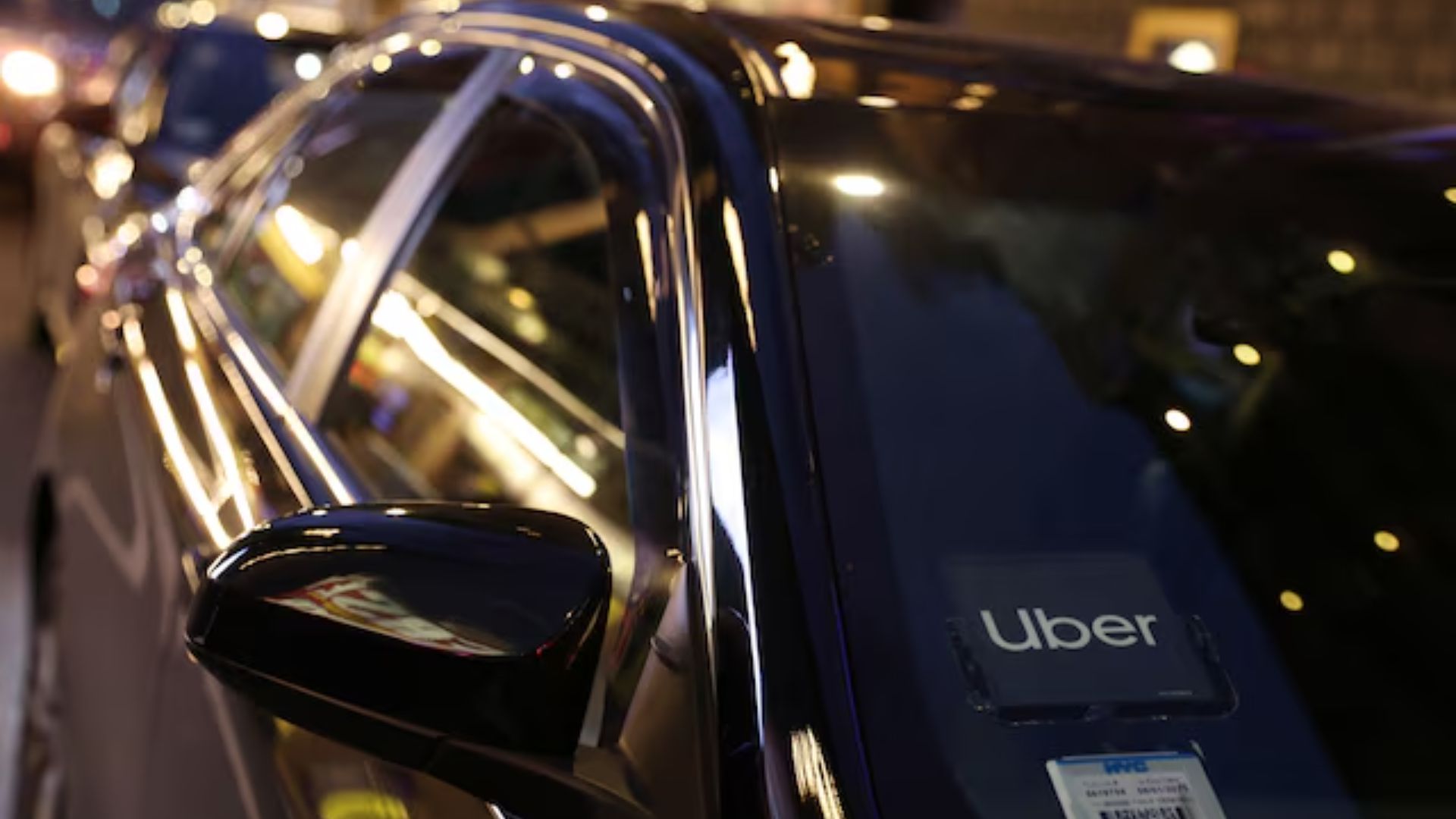
(Reuters) – Uber forecast fourth-quarter profit below Wall Street expectations on Wednesday, as a shortage of drivers, costlier fuel and the Middle East conflict choked ride-hailing growth from India and Brazil to Canada.
The slowdown is forcing Uber to spend more on recruiting and keeping drivers even as it funds acquisitions and a push into autonomous vehicles.
CEO Dara Khosrowshahi told analysts the company is shifting incentive money from riders to drivers, which can mean higher fares. “Now this year we’re taking down rider incentives and we’re using those dollars to fund driver incentives,” he said on a call with analysts.
Shares of the ride-hailing company were up about 1.5% in early trading.
Uber forecast fourth-quarter adjusted profit of 95 cents to 99 cents per share, below estimates of $1.06 per share, according to data compiled by LSEG.
The company said the Middle East conflict took about 75 basis points off Mobility gross bookings growth in the third quarter, and it assumes a 100 basis-point hit in the fourth quarter as escalations coincide with the busy holiday travel season.
Mobility gross bookings grew 17% on a constant-currency basis, slowing from 20% in the second quarter.
“Elevated fuel prices and tighter driver availability weighed on supply growth in several international markets,” Khosrowshahi said.
Business in Canada was also hit by tighter immigration flows, and Khosrowshahi said the market is “meaningfully undersupplied.”
The company expects gross bookings of $63.25 billion to $65.25 billion, compared with analysts’ estimates of $64.42 billion.
It expects adjusted core profit of $3.13 billion to $3.23 billion compared with estimates of $3.19 billion.
Third-quarter revenue of $14.77 billion grew 10% and was the slowest since the first quarter of 2021, but it topped estimates of $14.69 billion.
Uber said it expects about 700 fully driverless vehicles on its platform by year-end and more than 2,000 by the end of 2027. It plans to focus capital on a smaller group of autonomous-vehicle partners.
The company also agreed to buy catering marketplace ezCater. Apart from autonomous-vehicle investment, it expects “minimal to no further M&A through at least 2027”.
Reporting by Akash Sriram in Bengaluru; Editing by Arun Koyyur