
By WAF Think Tank
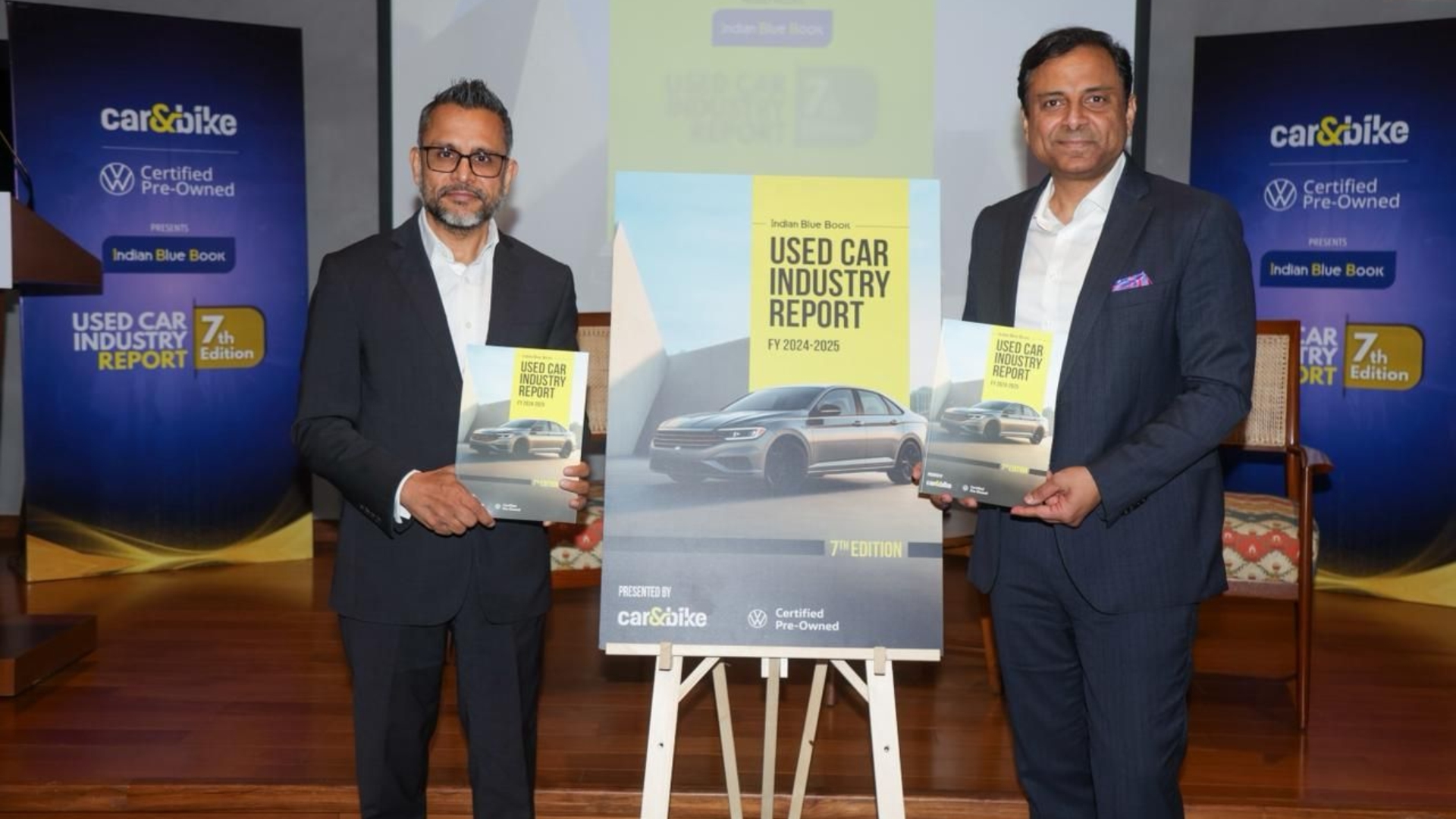
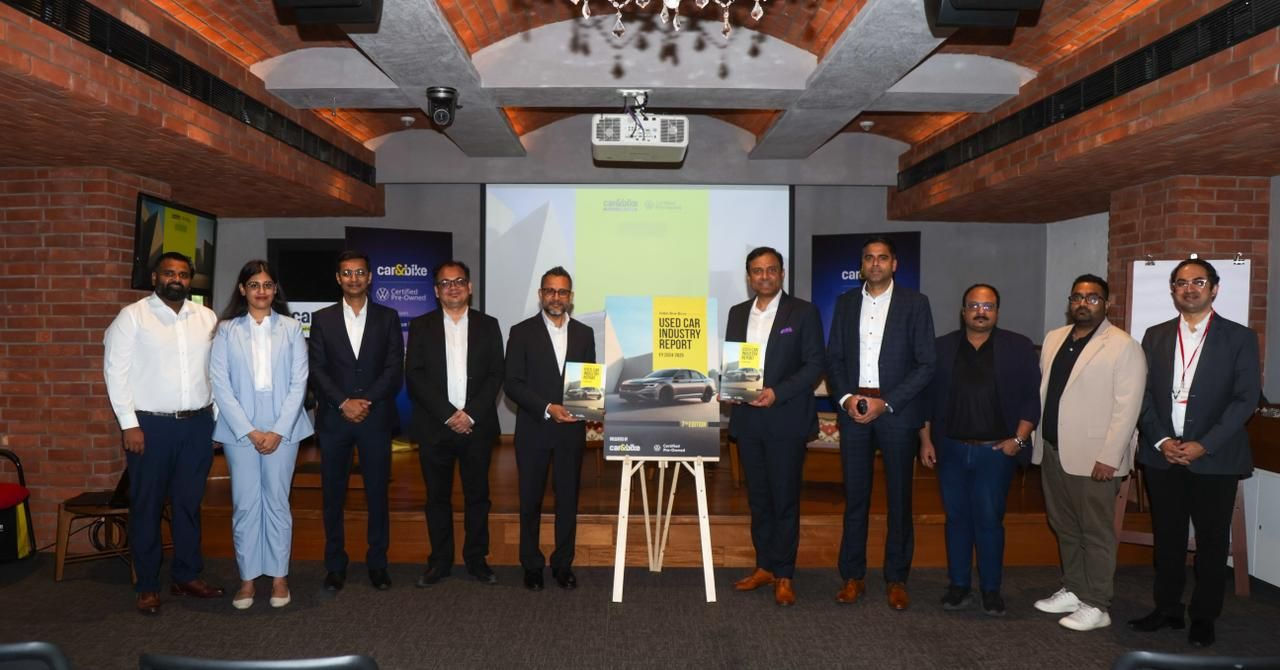
• The seventh edition of the Indian Blue Book – the annual benchmark report for India’s pre-owned car market – has been officially unveiled by Volkswagen India (through its certified pre-owned car business) in collaboration with car&bike (a leading automotive media brand backed by Mahindra First Choice Wheels Ltd.).
• The report offers fresh insights into the evolving dynamics, buyer behaviour and growth trajectory of India’s used-car ecosystem.
Background & Purpose
Held annually, the Indian Blue Book (IBB) is a comprehensive study of India’s pre-owned passenger-vehicle segment. The 2025 edition (seventh overall) draws on primary research and market data to decode shifts in demand, supply, segment preference and the growing formalisation of the used-car business.
The collaboration brings together car&bike’s editorial and data-capabilities with Volkswagen India’s certified-used-vehicle programme, signalling the increasing importance OEMs are placing on the used-car channel.
Key Findings from the 7th Edition
- Some of the headline insights from the report include:
- India’s pre-owned passenger-vehicle market reached ~5.9 million units in FY 2024-25 and is projected to grow at a ~10 % CAGR to reach ≈9.5 million units by 2030.
- The share of SUVs and compact SUVs in the used-car market has surged to over 50 %, up from 23 % about four years ago—underlining a clear “premiumisation” trend.
- Organised, certified used-car channels are gaining ground: more than 70 % of customers believe organised dealers offer superior service, quality, and value, which is increasingly important in used-car purchasing decisions.
- Brand loyalty is emerging strongly: about 42 % of pre-owned-car buyers intend to stick with the same brand for their next purchase.
- Non-metro markets are becoming prominent growth engines: ~68 % of non-metro buyers reportedly intend to purchase used cars again.
- Warranty, quality and technology matter: 66 % of buyers value warranty coverage most among add-ons; although only ~6 % of purchases currently involve AI-based tools, adoption is expected to accelerate.
“Indian consumers today are more informed and discerning and seek vehicles that offer proven safety, reliability, and performance.” — Nitin Kohli, Brand Director, Volkswagen India.
“For the first time, used cars in India are driving aspiration, not just affordability.” — Mohammed Turra, MD & CEO, Mahindra First Choice Wheels.
Why This Matters
The findings of the 7th edition of the Indian Blue Book highlight several important shifts for the Indian automotive industry:
- Used car market is no longer just affordability-driven — It is increasingly driven by aspiration. Buyers are moving from hatchbacks to compact SUVs, from old sedans to SUVs, seeking better build-quality, safety ratings and residual value.
- Organisation and structure growing — The large and fragmented used-car market is moving toward formal business models: certified pre-owned programmes, OEM-backing, structured financing, online procurement and transparency. This helps bridge trust gaps.
- Resale value and brand strength matter more — Vehicles from brands with strong build-quality and residual values (e.g., Volkswagen, Honda, Skoda) are preferred. For OEMs, the used-car business becomes a way to extend brand loyalty and lifetime-value beyond the initial lifecycle.
- Non-metros are the frontier — With rapid growth, rising incomes and increased aspiration, tier-2/3 markets present sizeable opportunities for organised used-car players.
- Technology, data and certification increasingly key — Inspection tools, digitalisation, AI-enabled decision-making, warranty and certification programmes are becoming differentiators in the used-car purchase process.
Implications for Stakeholders
- OEMs: A structured used-car channel offers OEMs a way to retain customers, protect residual values of their products, and manage trade-in/up-gradation cycles more proactively. The fact that VW India is deeply involved underscores this.
- Dealers / Organised players: The shift to preference for certified, transparent used-cars means independent/unorganised players may face margin- and trust-pressure unless they adopt formal processes, digitalisation and value-added services.
- Buyers: Today’s used-car buyer is more informed, more demanding (on safety, quality, features) and more willing to buy up-market. Warranty, certification and accessible financing are major factors.
- Policy & ecosystem: With increasing formalisation, the used-car market can contribute more meaningfully to mobility-ecosystem efficiency: faster vehicle-turnover, better traceability, and potentially lower environmental impact through reuse and graded upgrades.
Looking Ahead
The 7th edition of the Indian Blue Book sets the stage for the next wave of growth in India’s used-car market. With projections pointing toward nearly 10 million units by the end of this decade, the focus will likely be on:
- Further growth of SUVs/compact SUVs in the used segment
- More strong OEM-certified pre-owned programmes
- Greater penetration of technology (AI-based valuation, inspection apps, online marketplaces)
- Expansion of high-quality used-car supply (from scrappage, trade-ins, newer cars upgrading)
- Further lift in consumer expectations around safety, features, brand, and quality
The launch of the seventh edition of the Indian Blue Book is timely and relevant. It not only quantifies where India’s pre-owned car market currently stands but also signals how fast and in what direction it is evolving. For OEMs, dealers, buyers and the ecosystem at large, this edition offers a rich repository of insights to strategise around quality, trust, brand and value in what is increasingly a formal, mature used-car industry.