
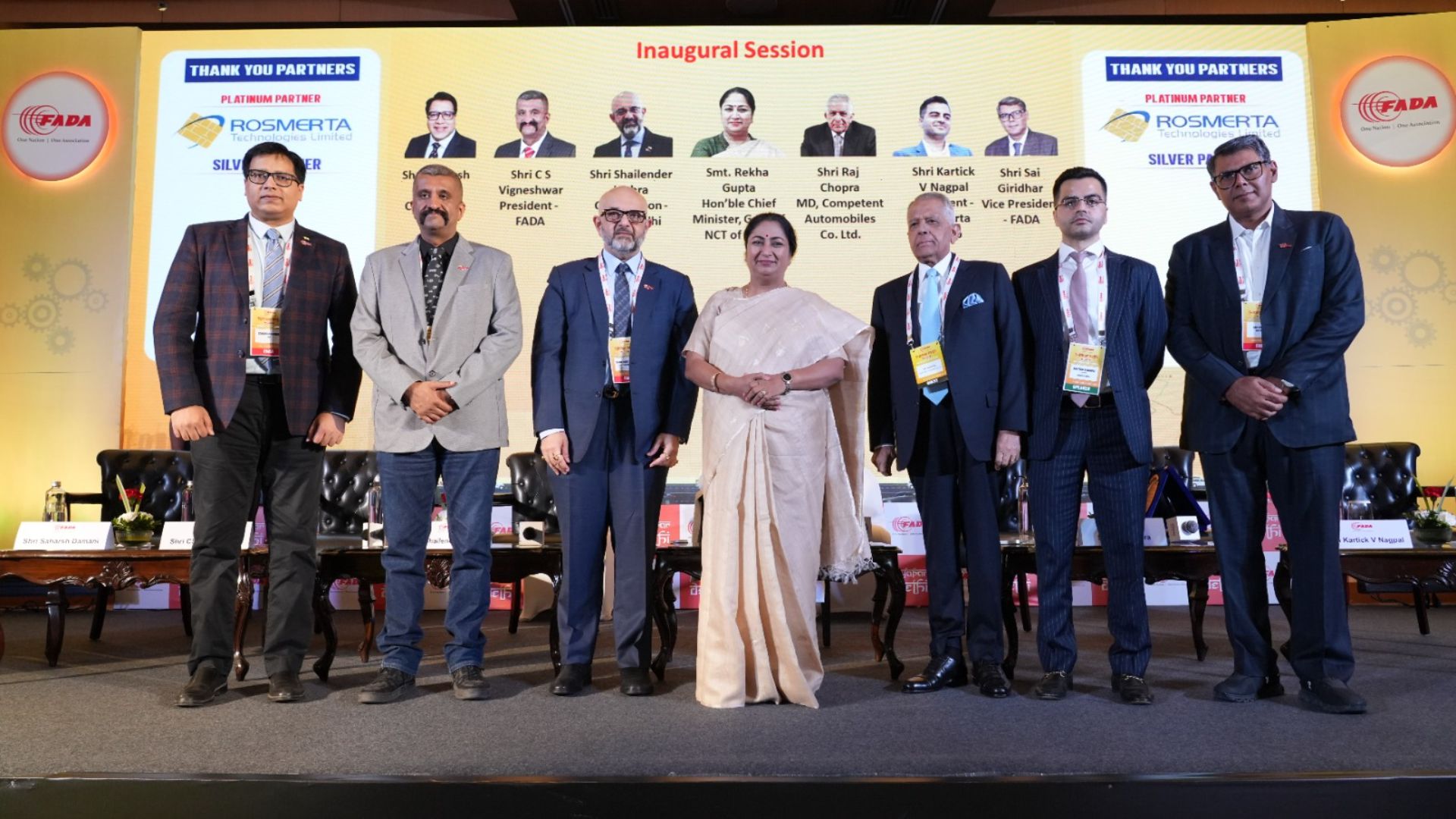
New Delhi | 17 April 2026: The Federation of Automobile Dealers Associations (FADA) today successfully concluded the 3rd Edition of Vyapar Delhi and 22nd Vyapar conclave nationally at Le Méridien, New Delhi. Held under the theme “Vyapar Delhi – Badalti Dilli”, the high-level industry forum brought together over 200 automobile dealers, senior policymakers, OEM leaders, financial institutions and domain experts to deliberate on the future of automotive retail and mobility in the National Capital Region.
The conclave was graced by Smt. Rekha Gupta, Hon’ble Chief Minister, Government of NCT of Delhi, as the Chief Guest, highlighting the critical role of the automobile retail sector in Delhi’s economic growth, employment generation, road safety and environmental transition.
Focused Dialogue on Policy, Compliance and Ease of Doing Business
Vyapar Delhi 2026 featured policy-centric discussions and fireside chats addressing some of the most pressing challenges facing automobile dealers in the capital, including:
- Draft Delhi Electric Vehicle Policy,
- Vehicle Scrappage Policy,
- MCD classification of workshops – industrial vs commercial, and
- the long-pending Compensation Cess issue.
A dedicated technical session on Compensation Cess provided legal clarity and the road ahead for protecting dealers’ legitimate financial credits.
‘Badalti Dilli’: Reimagining Passenger Mobility
A key highlight of the conclave was the panel discussion titled “Badalti Dilli: Reimagining Passenger Mobility in India’s Capital”, featuring senior leadership from leading automobile manufacturers, including JSW Motors, Volvo Car India, Honda Cars India, BYD India and Nissan Motor India.
The discussion explored changing consumer expectations, electrification pathways, product strategy and the role of dealers as critical enablers of India’s mobility transition.
Smt. Rekha Gupta, Hon’ble Chief Minister, Govt of NCT of Delhi said- “We are committed to the mission of a ‘Clean Delhi, Green Delhi, and Smart Delhi.’ Our government has introduced the country’s most comprehensive EV Policy, allocating ₹4,000 crore over the next four years to provide subsidies, tax waivers, and scrapping incentives that drive us toward green mobility. To tackle pollution at its source, we are revolutionizing our transportation sector through massive investments, for the Metro and the establishment of automated fitness centers to ensure every vehicle on our roads is fit and emission-free. A ‘Viksit Bharat’ by 2047 is only possible with a ‘Viksit Delhi.’ I call upon our automobile dealers to act as the government’s ‘working hands’ in motivating citizens to shift to clean energy. We are streamlining our policies to make registration easier and more efficient, ensuring that the people of Delhi have a world-class, environment-friendly experience right here in the capital. Together, we will transform Delhi into a city that defines the future of sustainable urban living.“
Mr. C. S. Vigneshwar, President, FADA, stressed the need for a balanced and inclusive approach to Delhi’s transformation: “Delhi is in motion, not just on its roads, but in its ambition, and at FADA, we believe automobile dealers must be full partners in this transformation. While we fully support the city’s commitment to a greener future and the Draft EV Policy, it is vital that this transition includes the 17,500 trained professionals whose livelihoods are woven into Delhi’s automotive ecosystem. Our vision of ‘Badalti Dilli’ is one where enablement moves faster than enforcement, where economic growth, road safety initiatives like CPR training and our ‘Buckle Up’ campaign, and environmental responsibility progress together without leaving anyone behind.”
He reiterated FADA’s continued engagement with policymakers, leadership development through FADA Academy, GenX and Women in FADA, as well as sustained legal efforts on the Compensation Cess matter.
Technology, Safety and Future Readiness
The conclave also featured sessions on AI-led dealership transformation, future-ready retail practices, and presentations by leading finance and technology partners.
Road safety remained a strong undercurrent throughout the day, with FADA reaffirming its commitment to helmet and seatbelt awareness, responsible driving behaviour, and CPR and first-response training at dealership levels.
Shri Shailender Luthra, Chairperson, FADA Delhi, said “Today’s gathering reflects a changing Delhi and an evolving auto retail trade. The sector today is vastly different from what it was five years ago, and we are witnessing a significant shift driven by rising consumer confidence and aspiration, with Delhi recording a 17% growth in vehicle sales as of March 2026. Annual new vehicle registrations stood at nearly 8 lakh units. Our industry remains a vital pillar of the city’s economy, with 550 dealership outlets providing employment to over 55,000 individuals and contributing approximately ₹7,150 crore to Delhi’s revenues through motor vehicle taxes and GST—₹2,650 crore annually in motor vehicle tax and ₹4,500 crore as GST contribution from the auto sector. The data clearly shows that India is no longer debating electric vehicle adoption; it is actively embracing it. Delhi has witnessed a sharp increase in electric commercial vehicles and a 62% rise in electric two-wheeler adoption. To support and lead this transition, FADA has proposed to the Delhi Government the installation of 150 public charging stations at our own cost. In parallel, we are committed to strengthening local employment through skill development centres at ITIs and have also proposed the establishment of a vehicle scrappage centre to further support the government’s environmental objectives. At FADA, we believe we are doing far more than selling vehicles—we are shaping the future of mobility. As Delhi and its businesses evolve, I am confident that our dealers will not only keep pace with change but will lead this vital transformation towards a sustainable future.”
Vyapar Delhi 2026 reaffirmed FADA’s role as a constructive stakeholder in shaping policy, supporting environmental goals, strengthening road safety outcomes and safeguarding livelihoods ensuring that as Delhi evolves, its mobility ecosystem evolves responsibly and inclusively.