
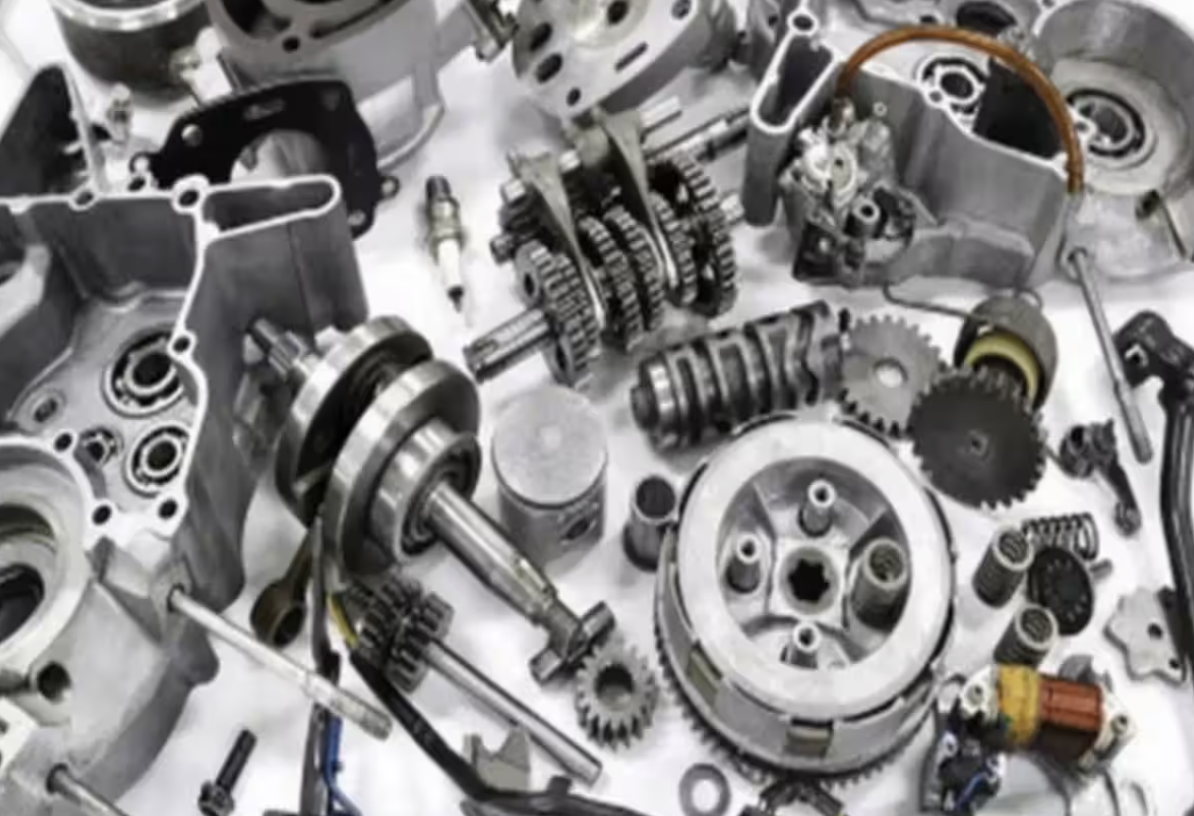
PTI | The automotive component industry has around ₹98,000 crore locked in inventory, of which ₹29,000-39,000 crore could potentially be released by improving inventory management, according to a Vector Consulting Group report.
The report said the potential working-capital release could include ₹4,000-5,600 crore within the MSME ecosystem, which accounts for around 80 per cent of auto component manufacturers in the country.
According to Vector Consulting Group’s white paper, The Broken Flywheel: Building a Future-Ready Automotive Supply Ecosystem, firms adopting consumption-based replenishment approaches typically reduce inventory by 30-40 per cent, based on the consulting firm’s implementation experience.
The total sample size comprised 21 senior industry executives, with the data collection period from July to August 2026.
The study also estimated that India’s automotive component MSMEs account for approximately ₹2.4-2.9 lakh crore in turnover. A 30 per cent improvement in productivity across this base could enable ₹74,000-88,000 crore of additional annual turnover.
After accounting for material costs, this could represent an illustrative incremental value pool of ₹29,000-44,000 crore, it said.
The report said these gains could help create a self-reinforcing investment cycle, with operational improvements freeing up working capital, higher productivity generating recurring surplus and stronger supplier economics improving access to external capital.
The resulting surplus could then be channelled into technology, engineering, product development and other advanced capabilities needed to participate in higher-value segments of the automotive industry, it added.
The Vector study, launched at the 66th Annual Session of the Automotive Component Manufacturers Association of India (ACMA), found that 95 per cent of industry leaders surveyed believe MSMEs are not investing fast enough in capabilities required for future growth.
The research, based on inputs from senior executives from automotive MSME suppliers and supplemented by discussions with senior executives from Tier-1 and Tier-2 component companies, highlighted a significant gap between capabilities considered critical for future competitiveness and those currently available across the supplier base.
The study also pointed to a capacity paradox, with plants operating at an average utilisation of 75-85 per cent even as 91 per cent of surveyed respondents considered capacity a considerable challenge.
Frequent changeovers, quality losses, rework and poor material flow reduce effective productive capacity despite installed capacity being available, it said.
“The opportunity is not simply about adding more capacity. A significant part of the capacity that Indian companies already have is not being converted into productive output,” said Ravindra Patki, Managing Partner, Vector Consulting Group.
“Unlocking the cash trapped in operations, improving the economics of the existing business, and then channelling the surplus into enhancing capabilities will determine how Indian suppliers grow in the future automotive value chain,” he added.
According to him, India’s automotive opportunity will ultimately be determined by how quickly capability can spread through the supplier ecosystem.
The report said strengthening India’s automotive supplier base is critical to the industry’s competitiveness as vehicle value increasingly shifts towards batteries, power electronics, embedded software and integrated electronic systems.
India’s ability to capture the next wave of domestic localisation and global sourcing will depend on whether its supplier ecosystem can generate sufficient surplus to continuously invest in and upgrade capabilities, it added.