
Summary
- CATL Q2 net profit rose 36.5% y/y, revenue up 56.9%
- Stronger-than-expected profit boosted by energy storage business growth
- CATL to buy back A-shares worth 20 billion to 40 billion yuan
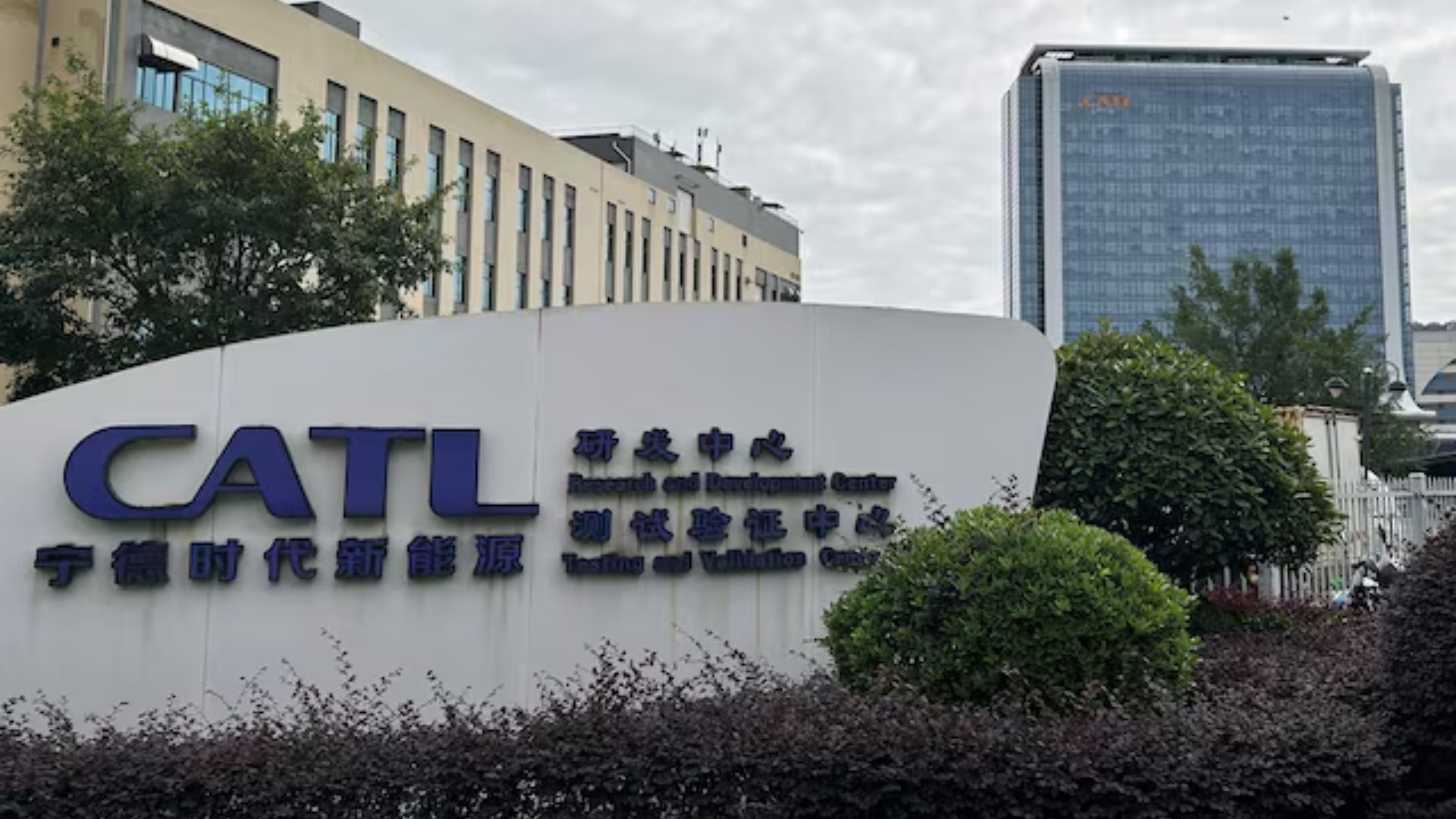
BEIJING, (Reuters) – Chinese battery giant CATL reported stronger-than-expected second-quarter profit, driven by robust growth in its energy storage business that helped offset softer demand in the electric vehicle market.
Net profit rose 36.5% year-on-year to 22.5 billion yuan ($3.32 billion) in the April-June quarter, according to a stock exchange filing on Friday, topping analysts’ expectations for a 29.7% increase, based on LSEG SmartEstimate data.
Still, it was the weakest quarterly profit growth in over a year. Revenue rose 56.9% to 147.8 billion yuan in the second quarter, compared with a 52.5% increase in the January-March period.
CATL has identified energy storage as a main growth driver as the EV industry matures and battery makers grapple with intensifying competition and margin pressure.
The supplier to automakers including Tesla, BMW and Volkswagen held a 40.2% share of the global EV battery market in the January-May period, according to SNE Research.
Growth in the EV market has slowed, particularly in China, where a prolonged price war has pressured automakers and suppliers alike.
CATL has accelerated its expansion in energy storage to capture rising demand from power grids and renewable energy projects. Its lithium-ion energy storage battery shipments nearly doubled in the first quarter, lifting its global market share to 29.9% from 26.9% a year earlier, SNE Research said.
The company has also stepped up its overseas expansion. In addition to battery plants in Germany and Hungary, CATL raised $5 billion in a Hong Kong listing in May, with proceeds earmarked largely for international expansion.
CATL’s gross margin for energy storage batteries fell to 24.0% in the first half from 25.5% a year earlier, while gross margin for EV batteries, still the company’s largest business segment, decreased by 1.8 percentage points to 20.6%.
The company also said on Friday that it plans to buy back its A-shares worth 20 billion to 40 billion yuan.
($1 = 6.7719 Chinese yuan renminbi)
Reporting by Qiaoyi Li, Zhang Yan, Xiuhao Chen and Ju-min Park; Editing by Joe Bavier, Kirsten Donovan