

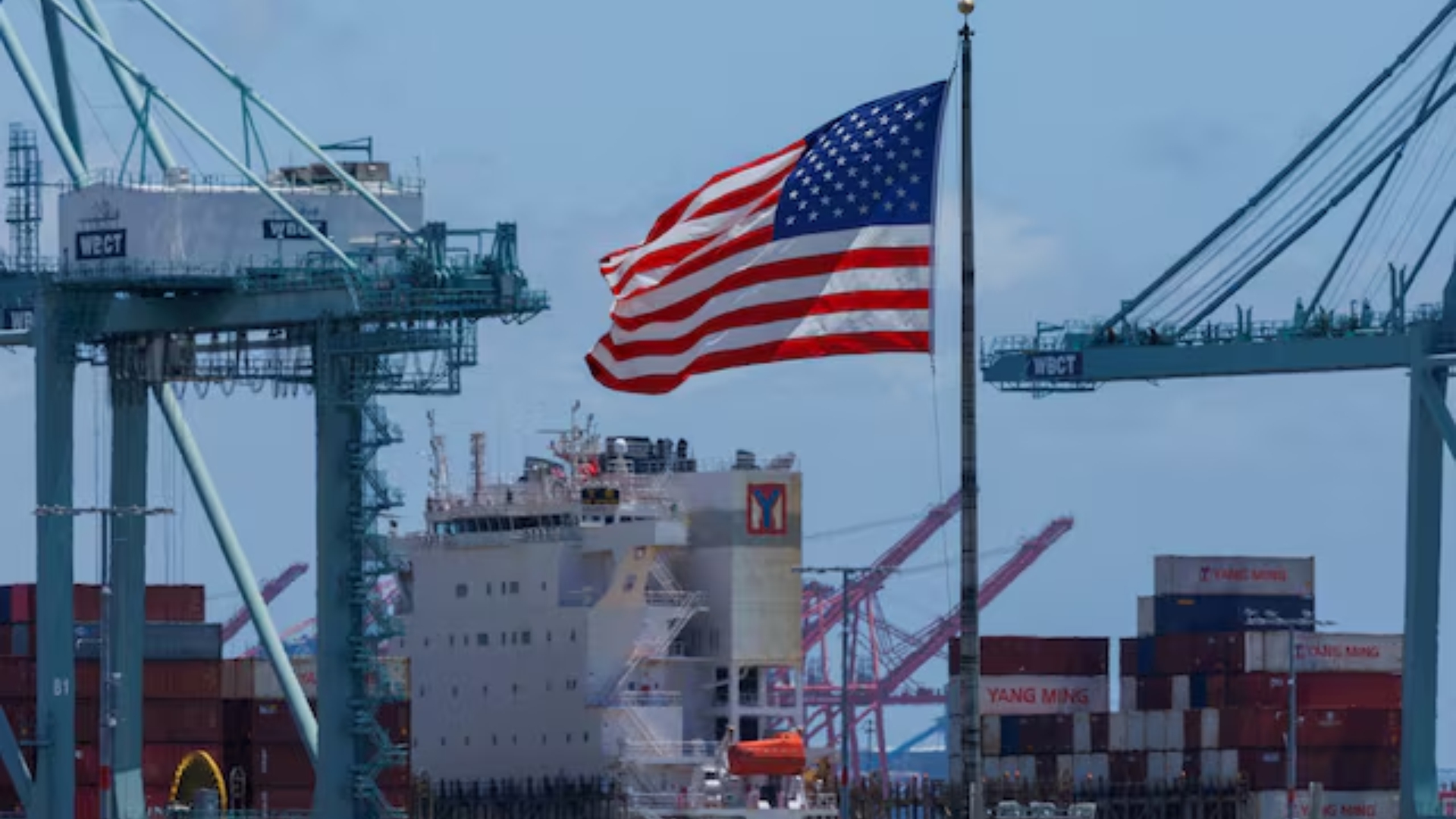
LOS ANGELES, (Reuters) – U.S. container import volumes fell 6.5% in February from last year to levels typical for the post-winter holiday shopping season, supply chain technology provider Descartes Systems Group said on Tuesday.
U.S. seaports last month handled 2,093,422 20-foot equivalent units (TEUs), the standard measure for container volume. That was the fourth-strongest February on record, Descartes said.
“This performance underscores the relative resilience of U.S. import demand even amid ongoing policy and economic uncertainty,” the firm said, adding that February 2025 import volumes were likely inflated by importer frontloading aimed at rushing in goods before U.S. President Donald Trump’s new tariffs hit.
Imports from China totaled 728,562 TEUs last month, down 16.5% year-over-year. Nevertheless, China’s share of total U.S. container imports increased marginally to 34.8%, Descartes said, as imports from India, Thailand and South Korea each reported larger declines.
“Trade conditions are increasingly being shaped by geopolitical escalation and policy shifts,” Descartes said.
The U.S. Supreme Courtruled on February 20 in a 6-3 decision that Trump overstepped his authority by using the emergency powers law to impose sweeping tariffs. His administration rapidly announced a new 10% global tariff on imports with plans to raise it to 15%, effective for up to 150 days.
On another front, U.S. and Israeli attacks on Iran have slowed the vital oil trade through the Strait of Hormuz to a trickle, sending fuel prices soaring.
Container carriers like industry leader MSC have implemented emergency fuel charges and stopped picking up cargo from and delivering it to Gulf ports, causing backups that could cascade through global supply chains.
The conflict also has reignited expectations that Iran-backed Houthi militants could resume attacks on commercial ships in the Red Sea.
Reporting by Lisa Baertlein; Editing by Jamie Freed