
Summary
- Shares gain 4%, signaling robust investor confidence
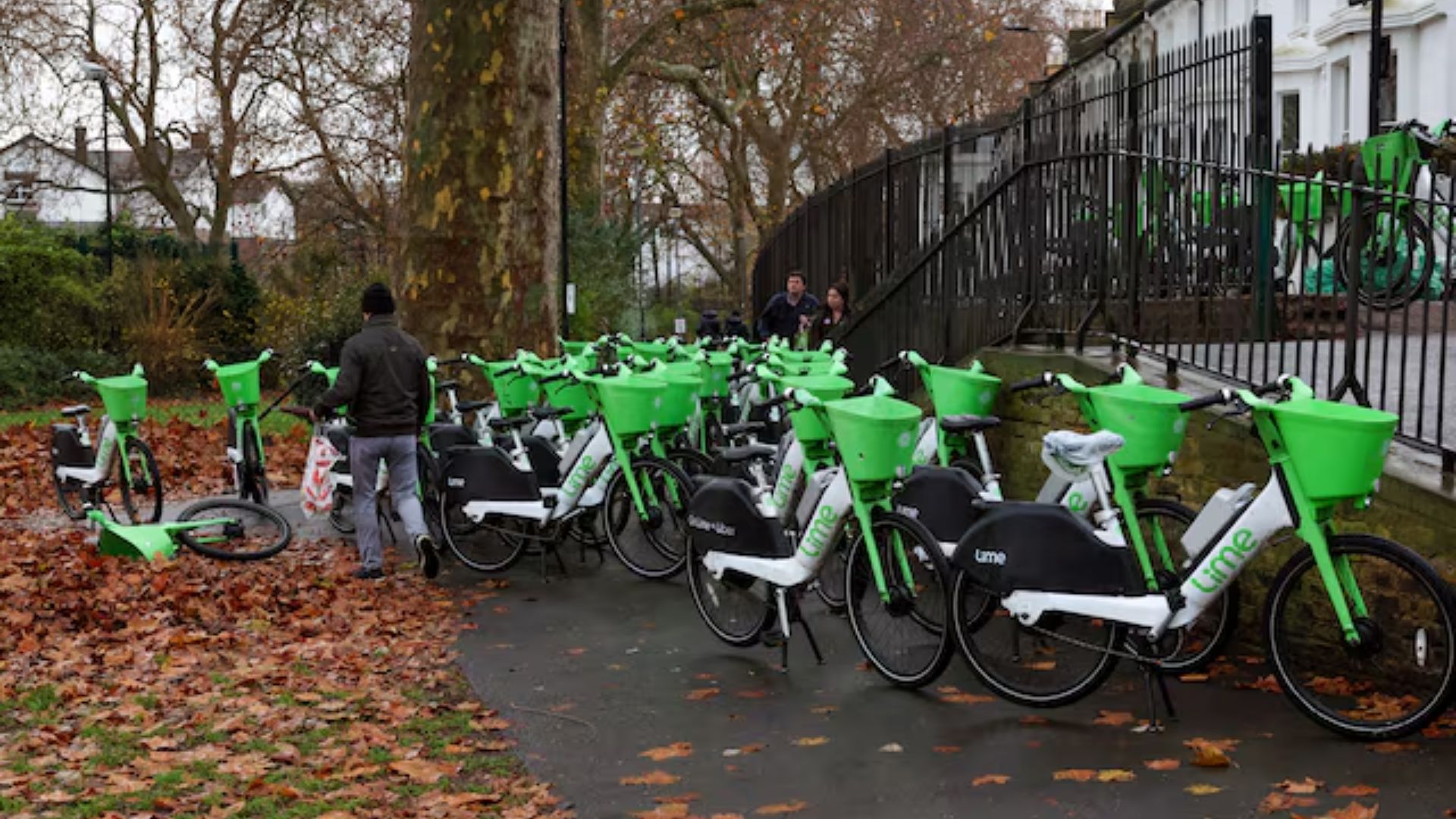
- Lime provides shared electric bikes and scooters
(Reuters) – Uber-backed Lime’s shares rose 4% in its Nasdaq debut on Wednesday, signaling robust investor confidence in the e-scooter and bike operator’s business model and valuing the company at about $1.7 billion.
Lime, founded in 2017, is based in San Francisco, and provides short-term rentals of electric bikes and scooters in more than 230 cities worldwide.
Shared e-bikes and scooters have gained popularity among commuters in densely populated cities, where their affordability and convenience have made them easy options for short trips.
Lime’s debut comes as new issuers enjoy renewed investor interest after volatility triggered by the Iran war prompted some companies to take a wait-and-see approach.
The U.S. IPO market has gathered pace in 2026, with a series of high-profile offerings, including SpaceX’s record-breaking $75 billion IPO, drawing investors back to new listings.
Lime CEO Wayne Ting said the offering shows that there is demand for micromobility companies.
“The biggest growth opportunity for Lime has been growing in our existing market. When we deploy more vehicles into a single city, we improve our density, and when we improve our density, it becomes a more reliable product, and that’s when people adopt and engage,” Ting said in an interview with Reuters. “The second … definitely is new cities and new markets.”
The company just launched a pilot program in Mexico City in time for the FIFA World Cup.
Lime priced its IPO at $25 apiece and shares jumped to $27 Wednesday morning before closing at around $26.
The company and existing stockholders sold about 7 million shares in the offering, generating roughly $174 million in total.
“Pricing at the midpoint and opening above issue suggests there was sufficient investor demand to support the deal, but the reception looks measured rather than euphoric,” IPOX Research Associate Lukas Muehlbauer said.
A LONG, BUMPY ROAD TO MARKET
Lime operates in an industry grappling with high operating costs and regulatory hurdles, and counts on its partnership with Uber for a significant chunk of its revenue.
Uber, the company’s biggest investor with a stake slightly north of 20%, offers Lime’s scooters as a transport option on its ride-hailing app. Ting worked at Uber before joining Lime.
“To keep the momentum, Lime needs to prove that it can grow through different seasons and market cycles without simply adding more vehicles and capex,” Muehlbauer added.
The company, which first floated ambitions to go public in 2021, is one of the few major micromobility companies to survive an industry shakeout that followed the COVID pandemic.
Its valuation dropped from $2.4 billion in 2019 to about $510 million in 2020, according to media reports at the time, as the pandemic triggered a sharp downturn in the industry.
Former rivals such as Bird filed for bankruptcy protection, while operators including Tier and Dott merged to cut costs and gain scale.
Lime has said in its prospectus that it has yet to turn a net profit. For 2025, it posted a net loss of $59.3 million on revenue of $886.7 million.
At a time when investors are grappling with the impacts of AI, Lime also has an AI-proof angle.
“We have a physical product, and you’re not going to vibe code your way into physical transportation. I think as long as people need transportation, Lime is a reliable, affordable, sustainable option for lots of people,” Ting said.
Reporting by Utkarsh Shetti in Bengaluru and Abigail Summerville in New York; Editing by Tasim Zahid and Will Dunham